AI Rendering for Architecture Firms & Studios
For a firm, visualisation is a throughput problem: every project needs concept images, every client meeting needs options, and every hour of V-Ray time is an hour of fee. Archome puts a 30-second rendering layer under the whole office — browser-based, plugin-fed, geometry-locked.
The problem
The bottleneck is rarely one hero image — it is the hundred small ones: massing options for Monday, a facade study for the planning meeting, a quick interior for the client who "just wants to see it warmer". Routing those through a render queue or an external visualiser burns fee and days.
Consumer AI tools fail firms twice: outputs drift from the modelled geometry, and ad-hoc personal accounts scatter work, licences and quality control across the office.
Archome centralises it: one credit pool, shareable render links, free SketchUp and 3ds Max plugins so the model stays the source of truth, an API for pipeline automation, and a structure lock that keeps every iteration faithful to the design.
What comes back

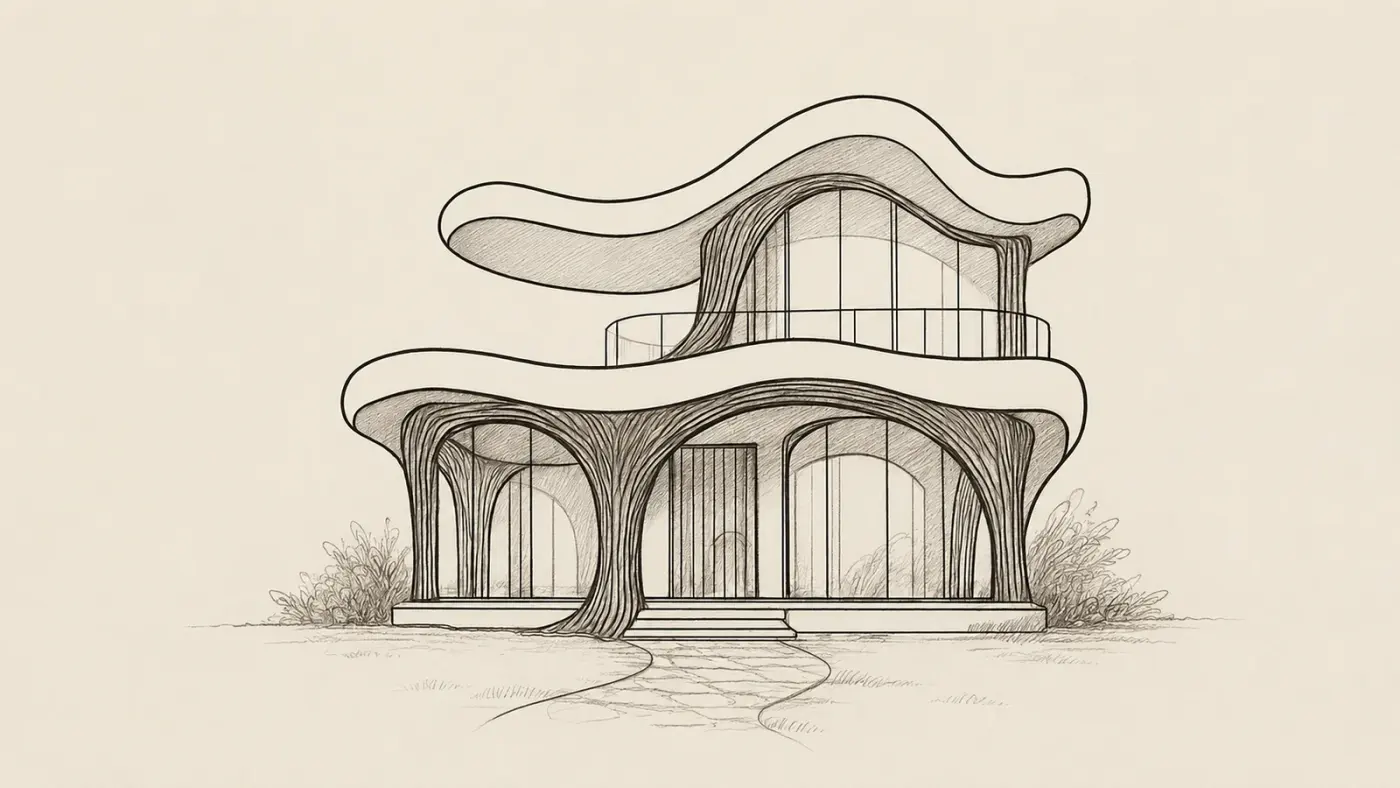
Sketch to render. Drag the handle to compare.
What it costs
| Quality | Credits per image | Cost on the $29 plan | Time |
|---|---|---|---|
| Fast | 10 | $0.29 | About 30 seconds |
| Ultra | 30 | $0.87 | Longer — heavier engine |
Prices exclude tax. A new account starts with 100 credits — three renders — with no card. Plans and credit packs.
How architecture firms use Archome
1. Feed it from the tools you already run
SketchUp and 3ds Max plugins send the active viewport in one click; photos, sketches and plans upload in the browser; the API covers batch and pipeline work.
2. Standardise the option loop
Same view, three material directions, 30 seconds each — juniors produce client-ready comparisons without touching the render farm.
3. Deliver beyond stills
Masterplans from above, construction-detail sheets, 2D-to-3D GLB handoffs, short cinematic clips and 4K print exports live in the same account and credit pool.
What you get
- Structure lock on every image-to-image render — office-wide consistency
- Free SketchUp + 3ds Max plugins and a REST API for pipelines
- One credit balance across every tool; renders shareable by link
- Full commercial licence on paid plans
- Studio plan: 10,000 credits/month (~333 Ultra renders); Enterprise adds shared team credits (on request), SLA and API scale
Honest limits: Archome is the visualisation layer, not the BIM stack — construction documentation, clash detection and spec stay in your existing tools. Per-seat SSO and granular roles are Enterprise-conversation territory, not self-serve today.
Start here
Compare us honestly
Choosing between tools? We keep honest side-by-sides — including when a competitor is the better fit: vs Veras, vs Gendo, vs D5 Render — or the full comparison index.
Questions professionals ask
How do several people in the office use it?
Every plan is a single account; no plan has per-seat logins. Renders are shareable by link. Firms that want several people drawing from one credit balance can ask for shared team credits on the Enterprise tier (via /enterprise), which also includes onboarding.
Does it plug into our SketchUp / 3ds Max pipeline?
Yes — free plugins send the current viewport straight to the renderer, so modelling stays where it is and Archome handles the visual loop. A REST API exists for batch and custom pipeline use.
Is output consistent enough for client work?
The structure lock keeps geometry, openings and camera fixed across iterations, which is what makes option comparisons presentable. Materials and atmosphere change; the design does not.
What does a firm actually pay?
Evaluation is free (100 credits to start, no card). Plus at $49 covers ~100 Ultra renders a month; Studio at $119 covers ~333; Enterprise at $399 adds shared team credits on request, API scale and SLA. Credit packs exist for project-shaped spikes.
Test it on a real project.
100 credits when you sign up — three renders on the free tier. No card required.
Start free →