D5 Render Alternative — Renders Without a GPU
D5 Render is a real-time engine for people who want to build and walk a scene. Archome AI is for the moment you only need the image.
Last updated: 10 October 2026
What D5 Render is
D5 Render is a desktop real-time rendering application with a strong following among architects and interior designers. You import a model, assign materials, place vegetation and lighting, and see the result update as you work. It has added AI-assisted features around that core over successive releases.
Its strengths are real and specific: interactive navigation, animation output, a large asset library, and control over every material and light in the scene. When the deliverable is a walkthrough or a set of views that must stay consistent across weeks of revisions, a scene file is a durable thing to own.
It is also desktop software with real hardware expectations. The frame is computed on your machine, which means a capable GPU, and a scene that grows will ask for more of it. That is the nature of real-time rendering rather than a flaw.
Where Archome AI differs
Archome AI does not build a scene. You capture the view you already framed — in D5, in SketchUp, in anything — upload the image, describe the material world you want, and about thirty seconds later you have a photorealistic version of that same view.
Nothing is installed and nothing is computed on your machine, so the work is not tied to a workstation. The trade is that you are producing frames rather than a navigable space: there is no camera to steer and no animation timeline.
This makes the two tools complementary more often than competing. The real-time engine is the right answer for walkthroughs and for scenes revisited over weeks. The browser is the right answer for the concept stage, when four material directions need to be seen before anyone commits to modelling one of them.
What Archome AI produces
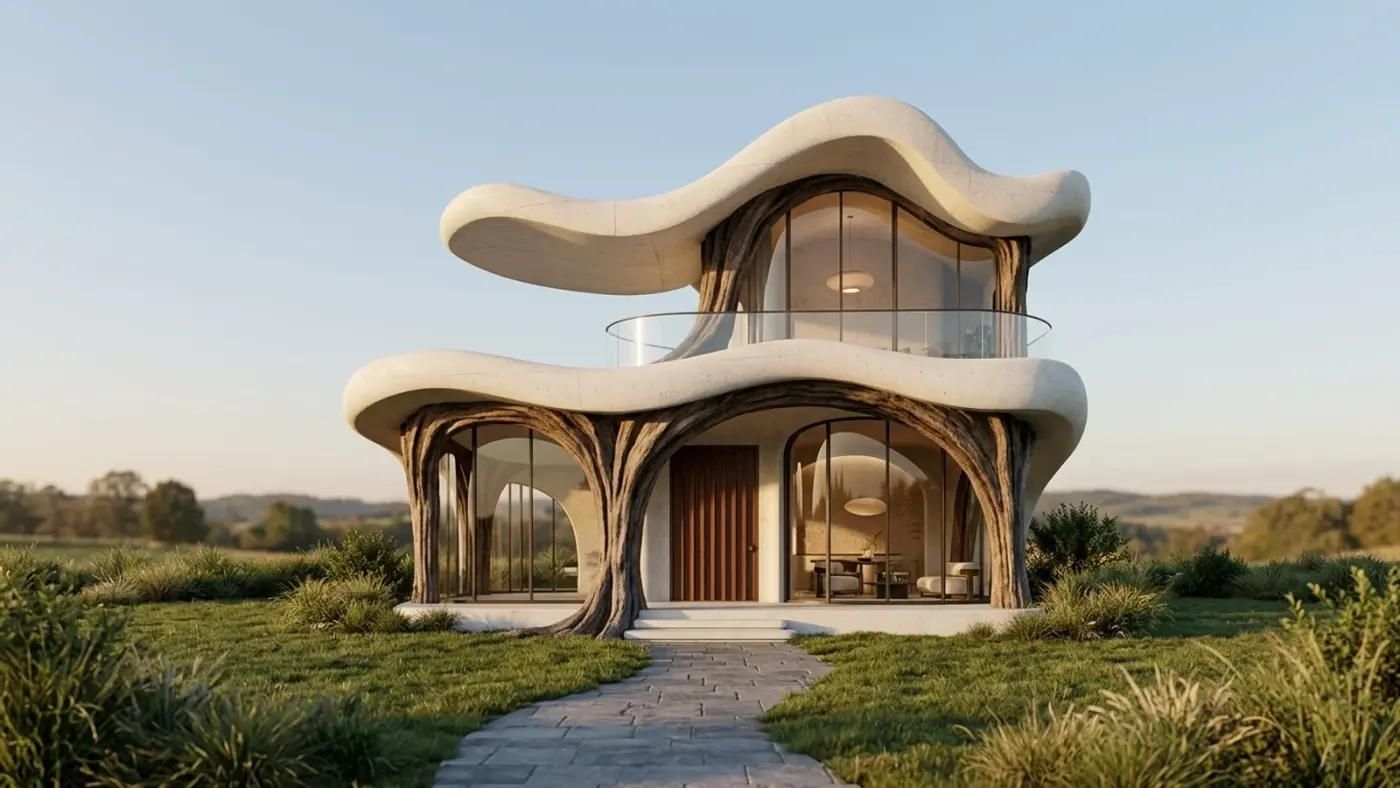
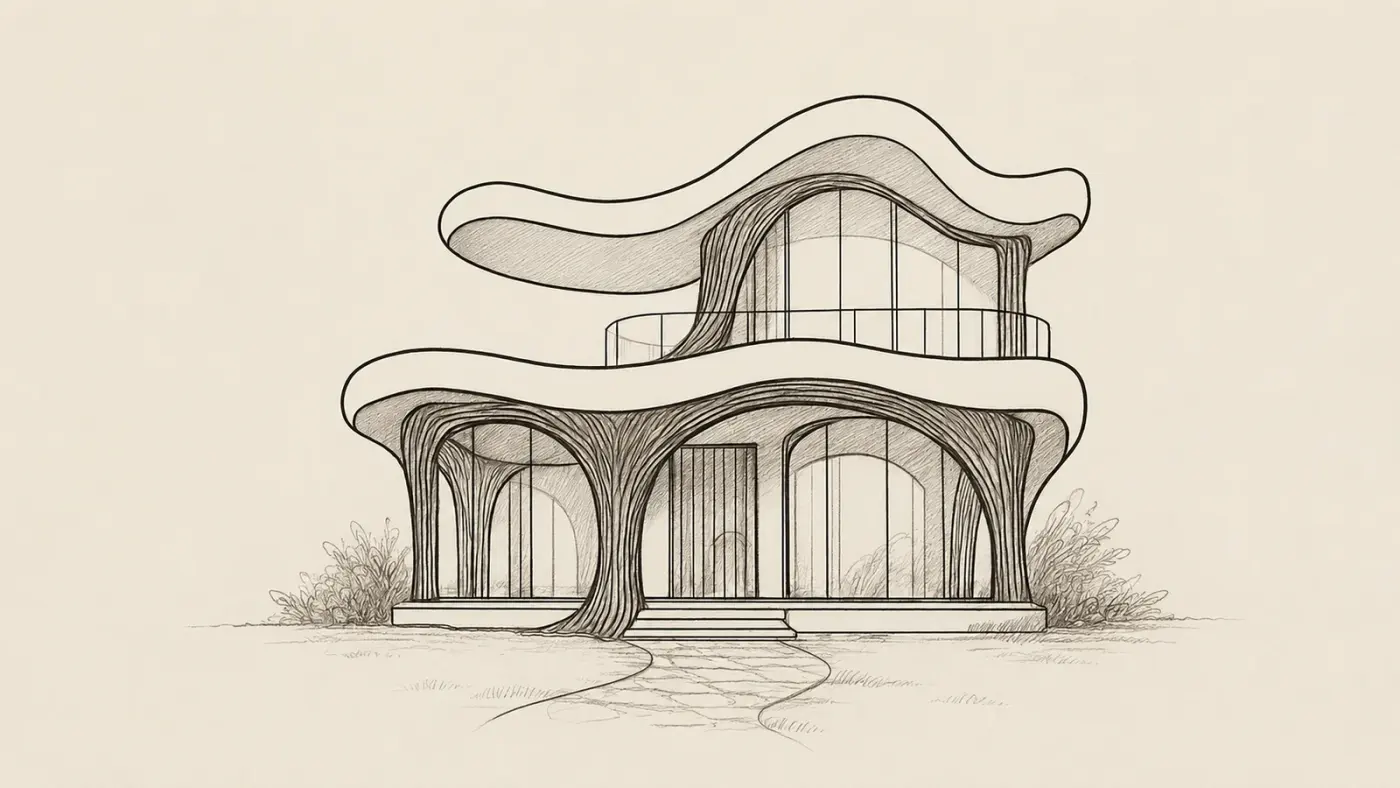
A sketch, rendered with Archome. Demonstration image \u2014 drag the handle to compare.
Side by side
| D5 Render | Archome AI | |
|---|---|---|
| Type | Desktop real-time engine | Browser AI renderer |
| Hardware | Capable GPU required | Any device — rendering is server-side |
| Input | Imported 3D model | Screenshot, photo, sketch or floor plan |
| Setup before first image | Import, materials, lighting, camera | Upload and describe |
| Navigable walkthrough | Yes — a core strength | No — stills and short clips |
| Time to first convincing image | Depends on scene preparation | About 30 seconds |
| Free trial | Check their site — tiers change | 100 free credits to start, no card |
Pricing and features change — check D5 Render's own site for their current plans. This page compares how the two approaches work, not this week's price list.
Price, render time & licence
| D5 Render | Archome AI | |
|---|---|---|
| Starting price | See their pricing page — a paid tier is required for commercial use | $29/mo (Lite), or free to start |
| Render time | Real-time once the scene is built — depends on your GPU, not a per-image wait | About 30 seconds per image, rendered in the cloud |
| Free trial | Free Community tier — personal/non-commercial use only per their terms | 100 credits once at signup (3 renders), no card, does not renew |
| Commercial license | Requires a paid plan — confirm current terms on their site | Included on every paid plan |
D5 Render's prices change — confirm current numbers on their own pricing page before you buy.
Where D5 Render holds its own
D5 Render earns its following honestly: once a scene is built, you are navigating it in real time, not waiting on a queue — and that makes client walkthroughs, flythroughs and iterative lighting checks genuinely better suited to a real-time engine than to any still-image renderer, Archome included.
Choose D5 Render if
- —The deliverable is a walkthrough, a flythrough or any output the client will navigate themselves.
- —You need deterministic control over every material and light, and the same scene revisited over weeks with small changes.
- —You have the GPU and you want the asset library — vegetation, people, vehicles — placed deliberately rather than described in words.
- —Consistency across a large set of views matters more than speed on any single one.
Choose Archome AI if
- —You are at the stage where the scheme is still moving and four material directions need to be seen quickly.
- —You do not have a GPU to hand, or the work has to happen on a laptop, a tablet or on site.
- —You want a still turned into a short cinematic clip, a 3D model exported as GLB, or a 4K upscale without another subscription.
- —You want to judge the quality on your own project first: 100 free credits to start, no card.
See the D5 Render alternative workflow in Archome
The dedicated page walks through turning a D5 viewport capture — or any screenshot — into a photoreal image in about 30 seconds, with the same free-to-start signup.
Compare them on your own project
Upload one photo, sketch or viewport capture and see what comes back. 100 free credits once at signup, no credit card.
Frequently asked
Can I use a D5 viewport capture as input?+
Yes, and it is a good one. The geometry is already exactly what you intend, so the model has nothing to invent. Even an untextured or white-model view works — arguably better, because there is no half-finished material for the AI to argue with.
Does Archome AI replace real-time rendering?+
No, and we would rather say so. If someone will steer the camera, you need a real-time engine. We produce frames. Most people who use both keep the engine for walkthroughs and use the browser for fast concept images and video.
What about animation?+
A finished still can become a short cinematic clip on paid plans. That is not the same as a navigable walkthrough and is not offered as a substitute for one.
Do I need to install anything?+
No. It runs in the browser. There are optional free plugins for SketchUp and 3ds Max if you want to send a viewport straight across, but they are a convenience, not a requirement.
Keep reading
Looking for a profession-specific breakdown? See Archome for architects, interior designers, architecture firms and visualization studios — or the plain-english guide to choosing AI rendering software.