Leonardo AI Alternative for Architecture — Archome AI
A general image platform with dials to turn versus a renderer that already knows it is looking at a building.
Last updated: 22 September 2026
What Leonardo AI is
Leonardo AI is a broad image and video generation platform: dozens of underlying models (its own Phoenix line, plus SDXL and Flux-class models), a real-time canvas, custom model training, and — more recently — video. It is aimed at a wide creative audience: game assets, marketing art, concept art, product shots, and everything in between.
For architecture specifically, Leonardo does offer image-guidance tools — Canny edge and depth-map ControlNet options that can hold a floor plan or massing screenshot roughly in place. Getting a reliable result means choosing the right model, the right guidance type and the right strength for each upload; it is a general toolkit, not a workflow built around one job.
Where Archome AI differs
Archome AI is tuned for one thing: take a real architectural input — photo, sketch, plan, CAD or viewport capture — and hold its geometry automatically. There is no model picker, no ControlNet strength slider and no guidance-type choice to get wrong; every render on the Interior, Exterior and Sketch-to-Render tools preserves walls, openings and proportions by default.
That default matters because general platforms are honest about where they struggle: reviewers specifically flag that Leonardo can lose exact dimensions or keep an element consistent across a floor-plan workflow, which is fine for concept art and a real problem when the image has to sit next to a drawing.
Around that core, Archome adds the parts of an architecture practice a general platform does not cover — a floor-plan tool, material identification with RAL/Pantone references, a downloadable 2D-to-3D GLB mesh, and free SketchUp and 3ds Max plugins.
What Archome AI produces
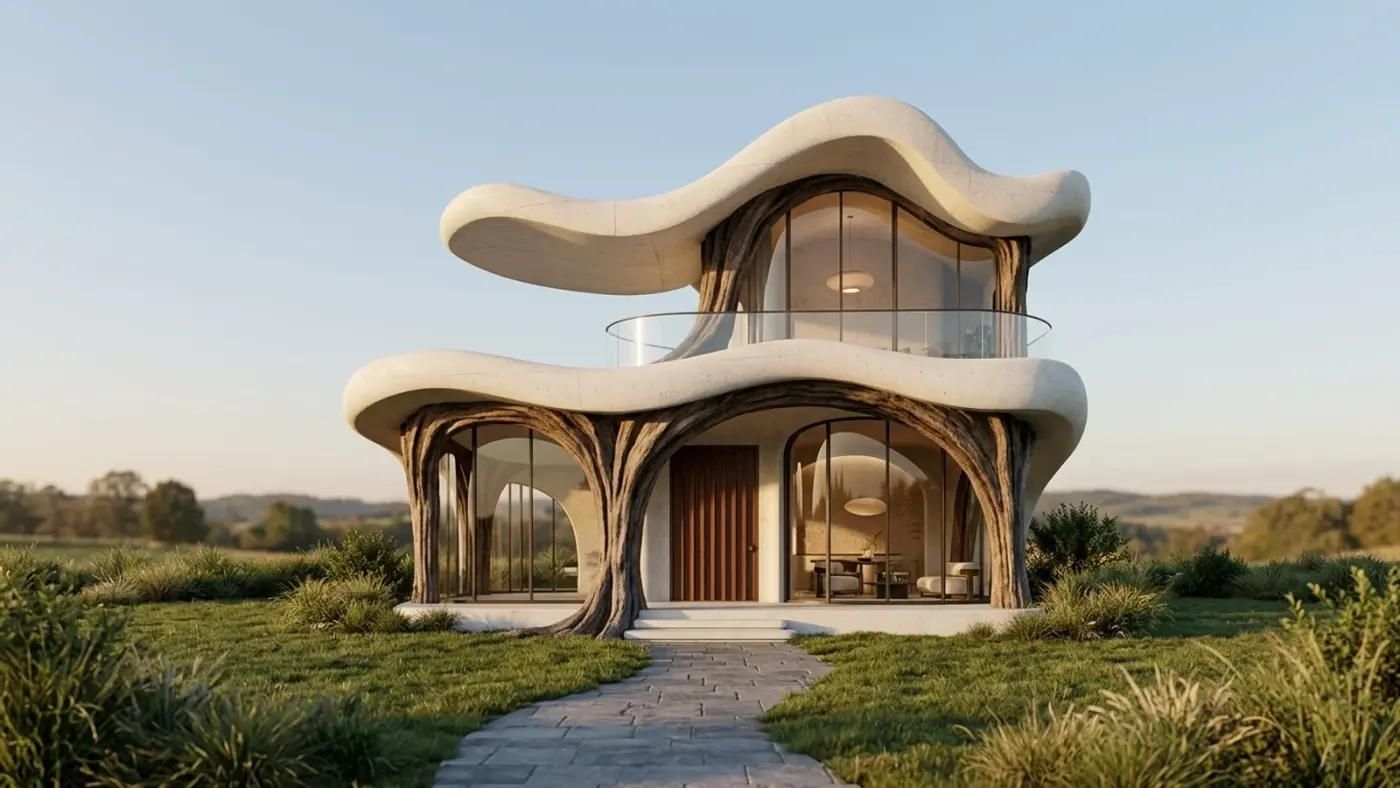
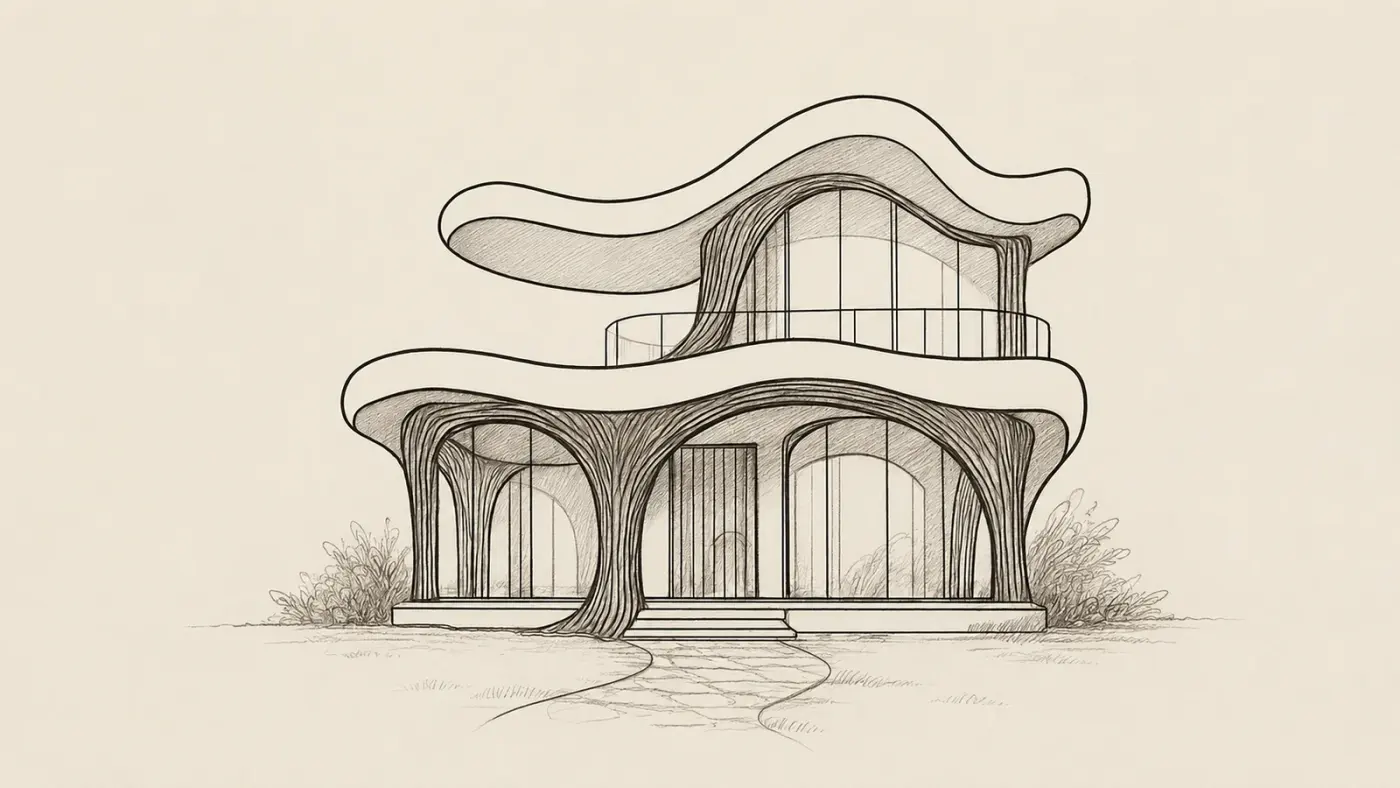
A sketch, rendered with Archome. Demonstration image \u2014 drag the handle to compare.
Side by side
| Leonardo AI | Archome AI | |
|---|---|---|
| Primary audience | General creators — games, marketing, concept art | Architects, interior designers, developers |
| Geometry preservation | Possible via manual ControlNet (Canny/depth) setup | Automatic on every architectural render |
| Floor plan dimension accuracy | Reviewers report drift on exact dimensions | Plan & Render reads the plan you upload |
| Model selection | Dozens of models to choose between | One tool per job, no model picker |
| CAD plugin | Not offered | Free SketchUp and 3ds Max plugins |
| Material specification | Not offered | Materia returns RAL/Pantone references |
| 3D model export | Not offered | Downloadable GLB from a single image |
Pricing and features change — check Leonardo AI's own site for their current plans. This page compares how the two approaches work, not this week's price list.
Choose Leonardo AI if
- —You need one platform for many kinds of creative work, not only architecture
- —You want to experiment across many different underlying image models
- —The output is concept art or mood imagery where exact geometry is not the point
Choose Archome AI if
- —The render has to match a real building or drawing without manual ControlNet tuning
- —You need a floor plan turned into rendered rooms, not just a styled image
- —You want material references, a 3D export or CAD plugins in the same account
Compare them on your own project
Upload one photo, sketch or viewport capture and see what comes back. 100 free credits once at signup, no credit card.
Frequently asked
Can Leonardo AI preserve architectural geometry?+
With manual setup — Canny or depth ControlNet guidance can hold a floor plan or massing screenshot roughly in place. It takes picking the right model and guidance strength per upload, and reviewers note it can still lose exact dimensions, which is why it is a general platform rather than an architecture-tuned one.
Does Leonardo AI have architecture-specific tools?+
It has an AI architecture generator page and general image-guidance features usable for architecture, but no dedicated floor-plan tool, no CAD plugin, and no material identification — those are built for a general creative audience, not a design practice.
Is Leonardo AI cheaper?+
Both offer a free tier and change their plans, so compare current pages rather than a number in an article. The real question is workflow fit: a model-picker platform suits broad creative work, a fixed pipeline suits repeatable architectural output.
Is Archome AI free to try against Leonardo AI?+
There is a trial, not a free tier. A new account gets 100 credits once, with no card. Every free render costs 30 credits and runs on the Fast engine (Ultra is for paid plans), so the trial is three renders in total and it does not renew — enough to judge output on your own project rather than on marketing samples. Anything you publish — an MLS listing, a portal, a client presentation, marketing — needs a paid plan, which carries the commercial licence.
Can I use the renders commercially?+
On any paid plan, yes — files carry a full commercial licence. Free-plan renders are intended for evaluation and personal use.
What should I actually compare?+
Run the same input through both tools and zoom in on the parts that matter: did the window count change, is the wall line still straight, are the proportions still yours? Marketing pages do not settle this — a side-by-side on your own photo does.
Keep reading
Looking for a profession-specific breakdown? See Archome for architects, interior designers, architecture firms and visualization studios — or the plain-english guide to choosing AI rendering software.