ReRender AI Alternative — Plus Plans and Video
ReRender AI and Archome AI both take an architectural image and give back a rendered one. The difference is how much of the rest of the project each tool is prepared to carry.
Last updated: 20 October 2026
What ReRender AI is
ReRender AI is a browser-based AI rendering service for architecture: bring a photo, sketch or model view, choose a direction, and it returns a rendered image. It ranks prominently for general AI architectural rendering searches.
It is built around the rendering job itself — a focused tool rather than a multi-deliverable studio.
Inputs are images you supply; CAD integration is not a stated part of the workflow.
Where Archome AI differs
Archome AI covers the render and the deliverables around it: floor plan to 3D view, masterplan boards, construction detail sheets, material swap, masked inpainting, 4K upscale, downloadable GLB and short video clips, all on one credit pool.
Free SketchUp, Rhino and 3ds Max plugins send the active viewport straight into the render engine, so the CAD-to-render step is not a manual export.
Structure lock on every image-to-image path keeps massing, openings and camera fixed, which is what makes a set of iterations usable in front of a client.
What Archome AI produces

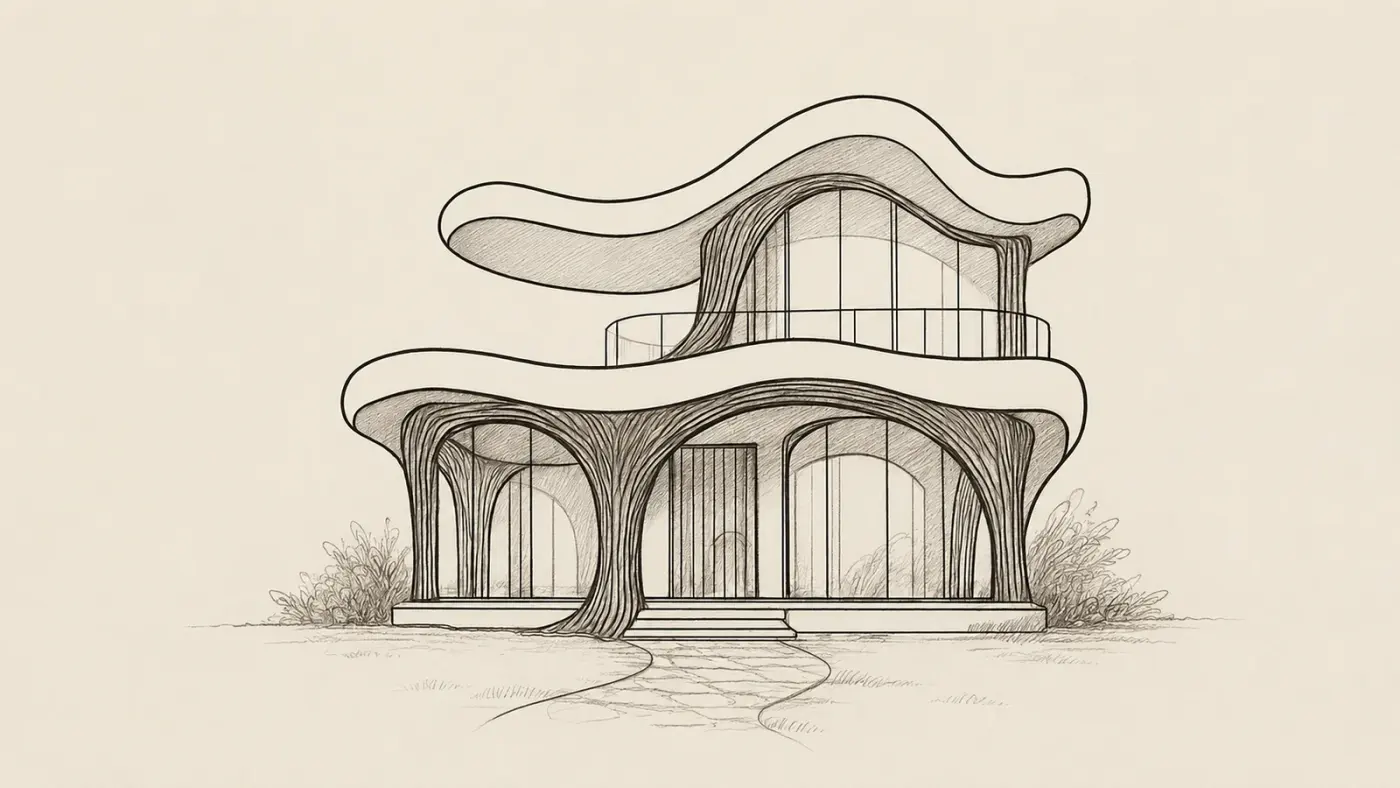
A sketch, rendered with Archome. Demonstration image \u2014 drag the handle to compare.
Side by side
| ReRender AI | Archome AI | |
|---|---|---|
| Core job | Image to render | Image to render, plus plans, details, 3D and video |
| CAD plugins | Not a stated feature | Free SketchUp, Rhino and 3ds Max plugins |
| Plan to render | Not a stated feature | Floor plan to 3D view |
| 3D output | Images | Downloadable GLB |
| Material data | Not a stated feature | Materia — RAL/Pantone estimates and sourcing |
| Free trial | Check their site for current terms | 100 free credits to start, no card |
Pricing and features change — check ReRender AI's own site for their current plans. This page compares how the two approaches work, not this week's price list.
Price, render time & licence
| ReRender AI | Archome AI | |
|---|---|---|
| Starting price | See their pricing page — the only pricing page found in this search was a dated, Chinese-language mirror (2024 copyright) whose currency could not be confirmed, and the matching figures elsewhere come from a competitor's own comparison page, not rerenderai.com directly | $29/mo (Lite), or free to start |
| Render time | Not stated on an official current page; four independent review sites estimate roughly 10-20 seconds | About 30 seconds per image, rendered in the cloud |
| Free trial | Third-party listings describe a standing free tier (watermarked renders, capped per day) rather than a one-time trial — unconfirmed on an official current page | 100 credits once at signup (3 renders), no card, does not renew |
| Commercial license | Not confirmed on an official current page | Included on every paid plan |
ReRender AI's prices change — confirm current numbers on their own pricing page before you buy.
Where ReRender AI holds its own
Reviewers outside ReRender AI's own marketing consistently describe it as fast and minimal: one image in, one rendered image back in roughly 10-20 seconds by several independent accounts, with nothing else to configure around. For someone who only ever needs a single quick still, that focus is a genuine advantage, not a gap.
Choose ReRender AI if
- —You want a focused, single-purpose renderer with minimal settings
- —Rendering is the only deliverable you need from this tool
Choose Archome AI if
- —Plans, details or a 3D file are part of the same project
- —You model in SketchUp, Rhino or 3ds Max and want the plugin hand-off
- —You need geometry provably unchanged across iterations
- —You want a walkthrough clip from the still you just made
Run the same kind of photo or sketch through Archome
ReRender AI takes a photo, sketch or model view and returns a rendered image in the browser. Archome runs the same kind of job on /tools/exterior in about 30 seconds, then lets you carry the result on to plans, a downloadable 3D model or a video clip if the project needs more than a still.
Compare them on your own project
Upload one photo, sketch or viewport capture and see what comes back. 100 free credits once at signup, no credit card.
Frequently asked
What is ReRender AI?+
A browser-based AI rendering service for architecture: you supply an image — photo, sketch or model view — and it returns a rendered version. It is focused on the rendering job itself.
Is there a ReRender AI alternative that also exports 3D?+
Archome AI runs the same rendering job and adds a 2D-to-3D path that returns a downloadable GLB, plus floor plan to 3D, masterplan, detail sheets and video on one account.
Which one keeps the building accurate?+
Send the same image through both and compare the openings, the roof line and the proportions. Archome runs a structure lock on image-to-image specifically so those survive; that is the check worth running on any tool in this category.
Is Archome AI free to try against ReRender AI?+
There is a trial, not a free tier. A new account gets 100 credits once, with no card. Every free render costs 30 credits and runs on the Fast engine (Ultra is for paid plans), so the trial is three renders in total and it does not renew — enough to judge output on your own project rather than on marketing samples. Anything you publish — an MLS listing, a portal, a client presentation, marketing — needs a paid plan, which carries the commercial licence.
Can I use the renders commercially?+
On any paid plan, yes — files carry a full commercial licence. Free-plan renders are intended for evaluation and personal use.
What should I actually compare?+
Run the same input through both tools and zoom in on the parts that matter: did the window count change, is the wall line still straight, are the proportions still yours? Marketing pages do not settle this — a side-by-side on your own photo does.
Keep reading
Looking for a profession-specific breakdown? See Archome for architects, interior designers, architecture firms and visualization studios — or the plain-english guide to choosing AI rendering software.