Autoenhance.ai Alternative — Photo Correction vs. Generative Staging
Autoenhance fixes the exposure, sky and lens distortion already in the photo; Archome AI adds furniture, restyles finishes and renders floor plans into 3D — two different jobs that both sit in a listing-photo pipeline.
Last updated: 1 October 2026
What Autoenhance.ai is
Autoenhance.ai is an automated real-estate photo-correction tool: upload a RAW or JPEG listing photo and it returns a corrected version in minutes — sky replacement, AI relighting, HDR merge from bracketed exposures, automatic perspective and lens correction, "window pull" balancing for bright interiors with a visible exterior view, color/brightness correction, reflection removal and automatic privacy blurring of faces and license plates.
It is built and priced for the real-estate photo pipeline rather than for individuals: Essential at $29/month for 50 images is aimed at solo agents and freelance photographers, Advanced at $109/month for 250 images at agencies and photography companies, and Expert at $449/month for 1,500 images (delivered at 6K) at real-estate media companies — plus a custom tier for higher volume. Check its current pricing page, since per-tier image counts and rates move.
It also ships a batch-upload workflow and an API, so photography companies can wire it directly into an MLS or delivery pipeline rather than correcting images one at a time in a browser.
Where Archome AI differs
Archome AI does not correct a camera's raw exposure, sky or lens distortion at all — it is a generative render engine: the same credit pool stages an empty room with furniture, restyles an occupied room or exterior, turns a floor plan into a furnished 3D view, upscales a frame to 4K and animates a short video teaser.
Autoenhance's published scope stays on the correction side of the pipeline — it does not add furniture, restyle finishes, accept a floor plan or sketch as input, or export video or 3D, based on its published feature list.
The two are typically sequential rather than competing: a photo would get exposure/sky/lens correction first (Autoenhance's job) and staging or restyling second (Archome's job) — publishing one does not replace the need for the other.
What Archome AI produces
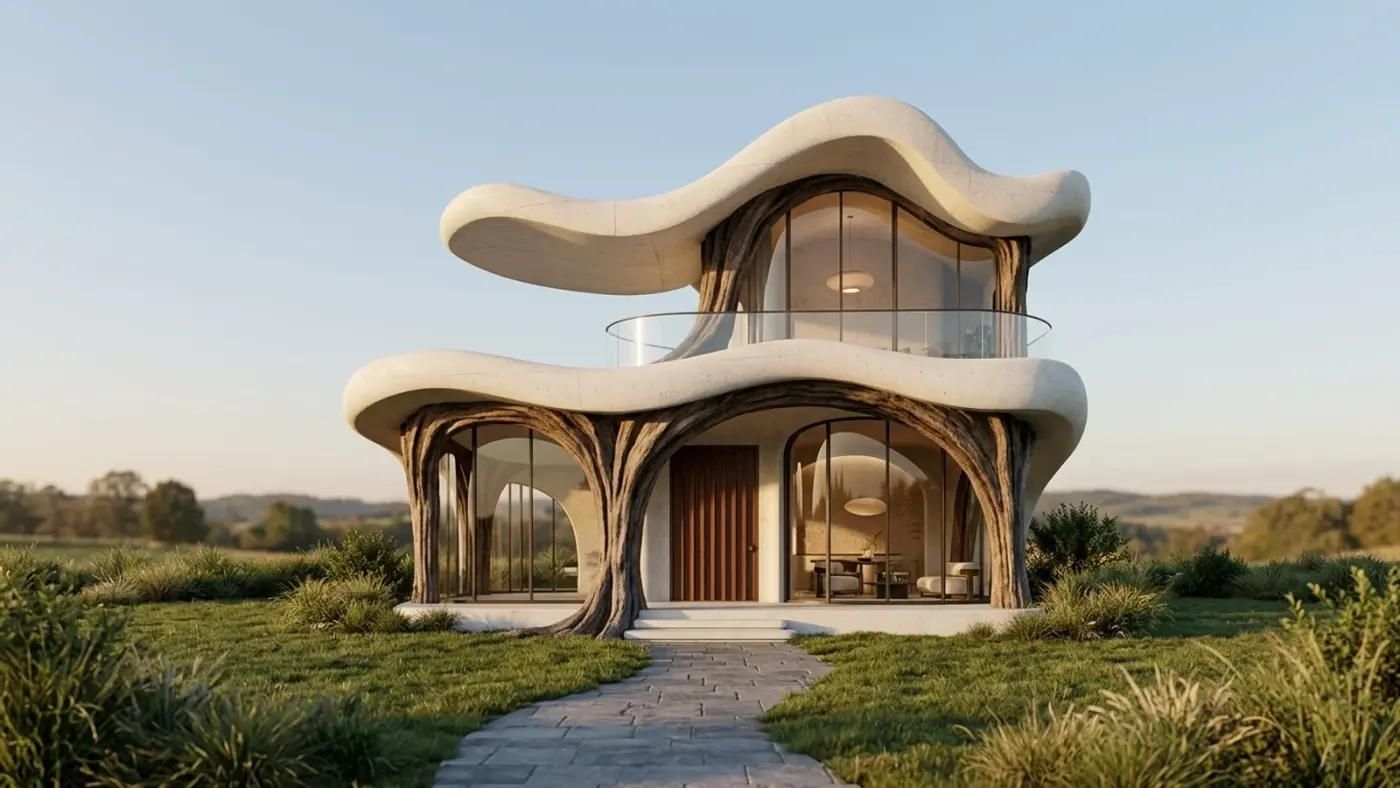
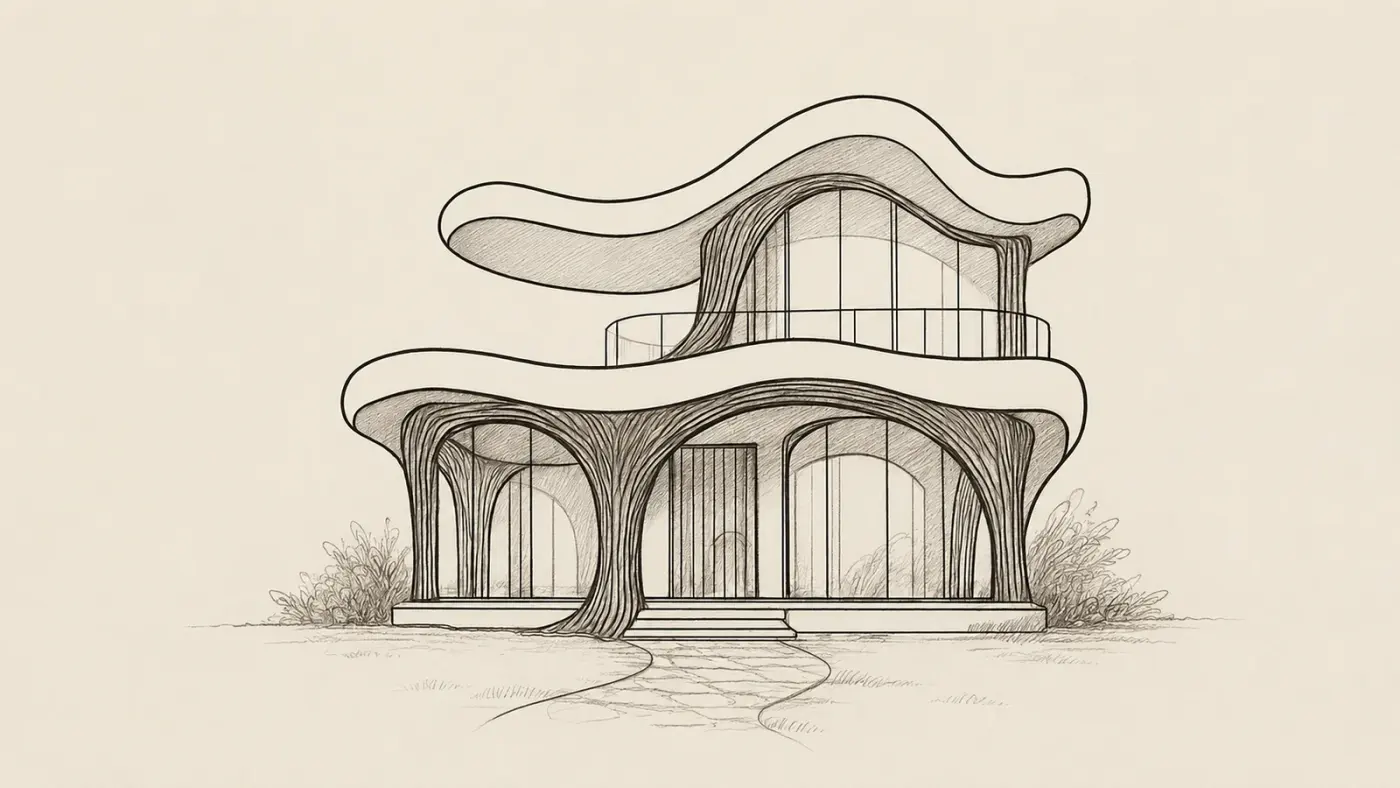
A sketch, rendered with Archome. Demonstration image \u2014 drag the handle to compare.
Side by side
| Autoenhance.ai | Archome AI | |
|---|---|---|
| Core job | Auto-correct listing photos: sky, HDR, perspective, color, privacy blur | Generative render: stage, restyle, plan-to-3D, upscale, video — 14 tools |
| Adds furniture / stages a room | Not a feature — corrects the existing photo only | Core job — structure lock keeps walls, windows, camera fixed |
| Floor plan or sketch as input | Not published — photo-only input | Floor plan to 3D and sketch to photoreal render, alongside photo-based tools |
| Privacy blurring (faces, plates) | Built in, automatic | Not a feature — Archome does not process or blur source-photo content |
| Cost shape | $29-449/month by image volume — see their site for current pricing | Credits: under ~$1 per staged photo on packs from $15 |
| Free trial | Check their site for current trial terms | 100 free credits at signup, no card |
Pricing and features change — check Autoenhance.ai's own site for their current plans. This page compares how the two approaches work, not this week's price list.
Choose Autoenhance.ai if
- —The job is fixing what the camera actually captured — a blown-out sky, a dim interior next to a bright window, barrel distortion, mismatched white balance — before the photo goes anywhere else.
- —You need automatic privacy blurring (faces, license plates) or a batch/API pipeline wired into an MLS delivery workflow.
- —A flat monthly plan sized to a steady shoot volume fits your billing better than a per-image credit meter.
Choose Archome AI if
- —The room is empty and needs furniture, or an occupied room or exterior needs restyling — Autoenhance's published scope does not do either.
- —The input is a floor plan or a hand sketch rather than a finished photo, or the output needs to be a video teaser or a 3D export.
- —You want to test it yourself: run the same listing photo through Autoenhance for correction and through Archome for staging, and judge the two jobs on your own property rather than on marketing pages.
Compare them on your own project
Upload one photo, sketch or viewport capture and see what comes back. 100 free credits once at signup, no credit card.
Frequently asked
Is Archome AI a good Autoenhance.ai alternative?+
Only for part of the pipeline — the two tools do different jobs. Autoenhance corrects a camera's raw exposure, sky and lens distortion; Archome adds furniture to an empty room, restyles an occupied one, or turns a floor plan into a 3D view. If the need is raw photo correction, Autoenhance is the closer match; if the need is staging, restyling or rendering, Archome is.
Does Archome AI replace skies or correct exposure like Autoenhance?+
No. Archome does not touch a source photo's exposure, sky, lens distortion or color balance the way Autoenhance's automated correction pipeline does. Archome's tools generate or restyle content (staged furniture, redesigned finishes, 3D views, video) rather than correcting what the camera captured.
How does pricing compare?+
Autoenhance publishes monthly plans by image volume — Essential around $29/month for 50 images, Advanced around $109/month for 250 images, Expert around $449/month for 1,500 images at 6K, plus a custom tier. Archome uses a shared multi-tool credit pool instead of an image-volume subscription; most staged or restyled renders cost 10-30 credits, typically under a dollar on a starter pack. Check Autoenhance's current pricing page before comparing, since tiers and image counts move.
Is Archome AI free to try against Autoenhance.ai?+
There is a trial, not a free tier. A new account gets 100 credits once, with no card. Every free render costs 30 credits and runs on the Fast engine (Ultra is for paid plans), so the trial is three renders in total and it does not renew — enough to judge output on your own project rather than on marketing samples. Anything you publish — an MLS listing, a portal, a client presentation, marketing — needs a paid plan, which carries the commercial licence.
Can I use the renders commercially?+
On any paid plan, yes — files carry a full commercial licence. Free-plan renders are intended for evaluation and personal use.
What should I actually compare?+
Run the same input through both tools and zoom in on the parts that matter: did the window count change, is the wall line still straight, are the proportions still yours? Marketing pages do not settle this — a side-by-side on your own photo does.
Keep reading
Looking for a profession-specific breakdown? See Archome for architects, interior designers, architecture firms and visualization studios — or the plain-english guide to choosing AI rendering software.