
Virtual Staging Cost Per Photo 2026: $0.29 AI to $30 Human
· Updated · 10 min read
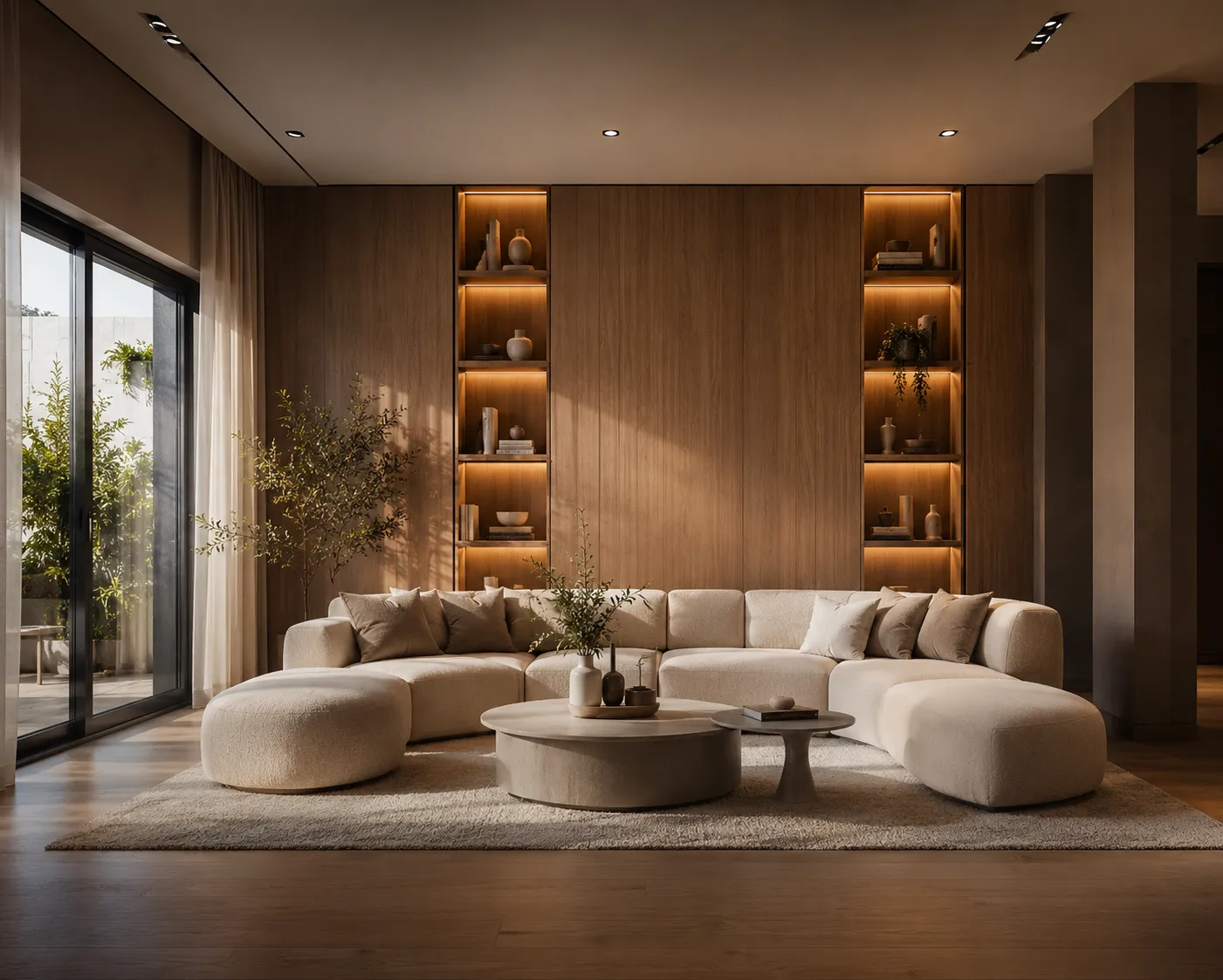
Two of the largest human-edited staging services publish their rates outright: BoxBrownie lists US$30 per photo and Styldod US$23, falling to US$16 on orders of eight or more — both checked on their own pricing pages on 10 September 2026. AI staging tools run a fraction of that, usually $0.20 to $0.90 per image. The gap is labour: a service pays a designer to furnish each photo by hand and queue it through a review pass, while AI software generates the same result algorithmically in about thirty seconds with no queue and no reviewer.
Where every number on this page comes from
Read off each vendor's own pricing page on 10 September 2026. Nothing here is a secondhand figure from another blog post.
- BoxBrownie — US$30 per staged photo. Adjacent services priced on the same page: item removal and virtual cleaning US$5 (one or two small items) to US$10, day-to-dusk US$5, image enhancement US$2, floor plan redraw US$30 (2D black and white) to US$40 (3D full colour).
- Styldod — US$23 per image, US$16 per image on orders of eight or more. Standard turnaround 24-48 hours, with paid rush tiers published openly: +US$6 for 24-hour delivery, +US$12 for 12-hour.
- VirtualStagingAI — not per photo at all, despite how often it is described that way. It is a subscription with a monthly photo quota: $16/mo for 6 photos, $19/mo for 20, $39/mo for 60, $79/mo for 150. That is $2.67 down to $0.53 a photo, but only if you finish the quota.
- ApplyDesign — prepaid coins: 1 coin per DIY 2D image, 1.5 for auto-staging. Coins cost US$10 each, US$8 at 10-19, US$7 at 20 or more. First image free.
- REimagineHome — monthly credits: $14 for 30, $49 for 200, $74 for 400, $99 for 900, at one credit per visualization. Five designs free without a card.
What we could not verify: the $75-100-per-photo premium tier that gets quoted around this category for luxury hero shots. No published rate card at that level turned up on 10 September 2026, so treat it as market chatter rather than a price you can rely on — if a service quotes you that, ask what the extra buys before agreeing. Prices in this category also move without notice; if you are building a client quote on any figure above, open the vendor's page and re-read it rather than trusting a dated snapshot.
What manual staging actually charges
The published rates are not one price — they are tiers stacked on top of each other. The low end, roughly US$16-23 a photo, is a bulk-order service or freelance editor working from a stock furniture library on a 24-48 hour turnaround; Styldod's volume rate sits here. The middle, around US$30, is a full-service company with account management and rush options quoted separately; BoxBrownie's published rate sits here. Above that, premium hand-finishing on a luxury hero shot is widely described as costing more, sometimes considerably more — but as noted above, no verified published rate card confirmed that tier on 10 September 2026, so treat any number you are quoted there on its own merits. None of this is padding at any tier: a person is opening the photo in an editor, placing furniture piece by piece, matching perspective and lighting, and sending it through a review pass before it ships.
What AI staging costs, in real numbers
On Archome's virtual staging tool, a staged photo costs 10 credits on the standard engine or 30 credits on the highest-quality one. Credits come from one-time packs that never expire before 12 months: a $15 pack gives 500 credits, a $39 pack gives 1,500, and a $99 pack gives 5,000. Do the division and the per-credit price drops as the pack gets bigger — $0.03 per credit on the $15 pack, about $0.026 on the $39 pack, about $0.0198 on the $99 pack. Translated into a staged photo:
| Pack | Cost per credit | Standard staged photo (10 credits) | Highest-quality (30 credits) |
|---|---|---|---|
| $15 (500 credits) | $0.030 | $0.30 | $0.90 |
| $39 (1,500 credits) | $0.026 | $0.26 | $0.78 |
| $99 (5,000 credits) | $0.0198 | $0.20 | $0.59 |
Agents staging continuously rather than one listing at a time tend to land on the $29/month plan instead of a one-time pack — it carries 1,000 credits a month, which works out to $0.029 per credit and includes the commercial licence a resale business needs.
One correction to the arithmetic above, because it catches people who sign up expecting ten free staged photos: those per-credit prices are the paid ones. On the free tier every render costs a flat 30 credits regardless of which engine runs it, so the 100 credits a new account starts with are three staged images, not ten. The 10-credit standard-engine price only applies once you are on a plan or have bought a pack.
Hidden costs that don't show up in the headline price
Two questions are worth asking any per-photo service before you book: what does a revision cost, and what does rush delivery cost. Redoing a staging pass after you've already approved and paid for one is common enough in the category that it's worth confirming up front rather than discovering it on an invoice, and a standard 24-48 hour turnaround usually has a paid same-day or next-morning option sitting above it. Neither is dishonest pricing — a human editor's time is the product — but neither is obvious from the headline per-photo rate either. With AI staging, both questions mostly disappear: a "revision" is rewording the room's style prompt and generating again, at the same per-credit cost and the same roughly 30-second wait, and there is no separate turnaround tier to upcharge because every generation runs at the same speed.
Equivalent scope: what the extra US$29 actually buys
A per-photo number only means something if you say what is inside it. Comparing US$30 with $0.30 as though they buy the same thing is the mistake that makes this whole category confusing, so here is the like-for-like.
| US$30 human-edited photo | $0.20-$0.90 AI photo | |
|---|---|---|
| Who places the furniture | A designer, by hand, on your specific photo | A model, from the brief you typed |
| Review before delivery | Included — someone else checks it | You. There is no second pair of eyes anywhere in the process |
| Turnaround | 24-48 hours standard; rush is a paid tier (+US$6 to +US$12 at Styldod) | About thirty seconds; there is no faster tier to buy |
| Revisions | Policy varies by vendor — confirm before booking | Regenerate at the same per-photo cost, as many times as you like |
| Hard photos (mirrors, reflections, corner angles) | Handled by human judgement — this is what the fee is really for | Weakest exactly here; check the output at full size |
| Geometry fidelity | Exact, because a person is compositing onto your photograph | Held by design, not guaranteed; drift shows at window mullions and ceiling lines first |
| Commercial licence | Inside the fee | Included on paid plans; read the terms on any free tier before an MLS upload |
Read that before deciding the gap is pure markup, because it isn't. US$30 buys a review pass and somebody else's judgement on the difficult photos. $0.30 buys speed, unlimited attempts, and the obligation to check the work yourself. Both are honest products at their price, and the choice is about which of those two things your listing actually needs.
A per-listing cost comparison
Take a realistic case: a ten-room vacant listing that needs every room staged before it goes live. At BoxBrownie's published US$30, that listing is US$300 before any rush fee or revision. At Styldod's US$16 volume rate — ten rooms clears the eight-image threshold — it is US$160, or US$220 with 24-hour rush on every image. At Archome's standard 10-credit engine the same ten rooms cost about $3 on the $15 pack, dropping to roughly $2 on the $99 pack; on the highest-quality 30-credit engine for every room, $6 to $9. An agent staging two or three listings a month on the $29/month plan spends under $30 for the month regardless of how many rooms that covers. The other side of the ledger belongs to the human services and it is not nothing: a hand-finished result, and a person checking every image before it ships — which some listings, a luxury hero shot or an unusually difficult angle, are genuinely worth paying for.
The assumptions behind every figure on this page
Any per-photo comparison is only as good as the assumptions under it. These are ours, stated plainly so you can swap in your own and redo the maths.
- "One photo" means one finished, delivered image — not one attempt. On a human service that is the deliverable by definition. On AI it is not: budget one to three generations per room before you get one you would actually publish. That multiplies the AI per-photo cost by up to three and still leaves it under a dollar, but it is the single most common way these comparisons flatter AI.
- Credits and quotas are only cheap if you spend them. A pack's per-credit price applies only when you use the pack. The same caveat hits every subscription in the category: VirtualStagingAI's $0.53 per photo assumes you finish all 150.
- Free-tier arithmetic is separate. On Archome's free tier every render costs a flat 30 credits whatever the engine, so 100 starting credits are three renders. The 10-credit price is a paid-plan price.
- Rush and revision fees are excluded from the headline rates above, because every human service that offers them quotes them separately. Styldod's are published (+US$6 / +US$12); most are not.
- Your own time is in none of these numbers. Thirty seconds of prompting plus a look at the output is a real cost when the job is forty rooms, and it is the cost that decides whether in-house staging is actually cheaper for you.
- Prices are a snapshot dated 10 September 2026, taken from vendor pricing pages, not from other blog posts. They will drift.
FAQ
Does virtual staging cost more for luxury listings? With human services, often yes — pricing tends to track the amount of hand-finishing a hero shot needs, and premium tiers above the published US$16-30 rates are widely discussed even though we could not verify a published rate card for them on 10 September 2026. AI pricing is flat per generation regardless of the listing's price point, which is why the cost gap widens rather than narrows at the top of the market.
What should I ask about before booking a per-photo staging service? Ask specifically about the cost of a revision and the cost of rush delivery — these are the two line items most likely to appear after the initial quote, and they're the two an AI tool effectively eliminates by generating every pass at the same price and speed.
Is there a cheaper way to stage a full listing? Buying credits in a larger one-time pack or on a monthly plan lowers the per-photo cost the way any bulk purchase does — see the pricing page for current pack sizes, or try a room on the virtual staging tool directly before committing to a pack.
Is "virtual staging ai" a product name or a general category? Both, and it's worth untangling before you compare anything. Virtual Staging AI — capitalized, the vendor compared throughout this page — is one specific product with its own pricing and quota. "AI virtual staging" as a lowercase phrase is the wider category: any browser-based tool, Archome included, that stages a room from a text prompt instead of handing it to a human editor. If the category is what you actually searched for, rather than this one vendor, the primer at AI virtual staging, explained is the better starting point, and the staging tool itself is right there to try — no card required.
Where does Archome fit next to Virtual Staging AI and BoxBrownie? Same category as Virtual Staging AI — browser-based, instant, geometry held in place on your own photo — but priced per credit instead of a fixed monthly photo quota, closer in practice to BoxBrownie's pay-per-image logic minus the human editor and the wait. For how it stacks up against the rest of the category rather than just these two, see the virtual staging software roundup.
Photographers reselling staging as a line item on their own packages should read what to charge for virtual staging instead — it covers the resale side of this same math. For a software-vs-software comparison rather than AI-vs-human, see the Virtual Staging AI vs BoxBrownie referee piece.
One more variable decides which of these numbers you actually live with: whether you are buying staging or selling it. For a photographer the per-photo fee stops being a cost and becomes margin — that version of the maths is in virtual staging for real estate photographers.