LookX Alternative — Wider Architecture Toolset
LookX made a name training AI specifically on architecture. Archome AI shares that architecture-first conviction and extends it across the whole deliverable chain.
Last updated: 16 October 2026
What LookX is
LookX is an AI design platform built for architects, known for training its own architecture-specific models and for workflows that go from text or image to rendered concept. It positions itself as a design-stage companion rather than a general image generator.
It has an active community side, template-style workflows, and has expanded steadily since launch — it is a serious tool in this category, not a wrapper.
Like most concept tools, its centre of gravity is the early ideation image: exploring massing, mood and style quickly.
Where Archome AI differs
Archome AI treats the concept image as step one of a chain: the same account carries floor plan to 3D view, masterplans, construction-detail sheets, material swap, inpainting, 4K upscaling, 2D-to-3D GLB export and short cinematic clips.
Workflow reach: free SketchUp and 3ds Max plugins send a viewport straight to the renderer; photos, sketches and plans upload straight in the browser. No install is required for any of it.
Every image-to-image path runs under a structure lock — massing, openings and camera survive restyles — which matters once a design is past the anything-goes phase.
What Archome AI produces
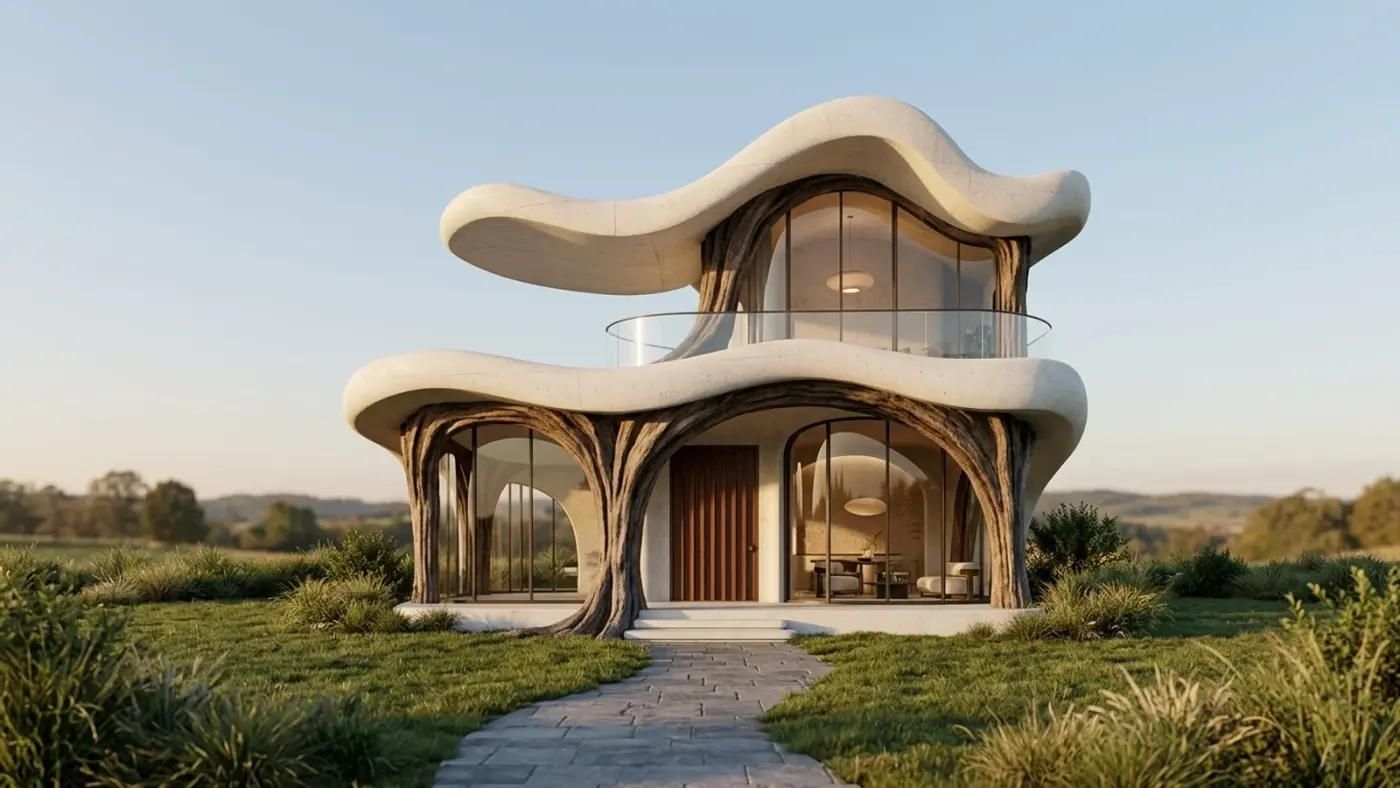
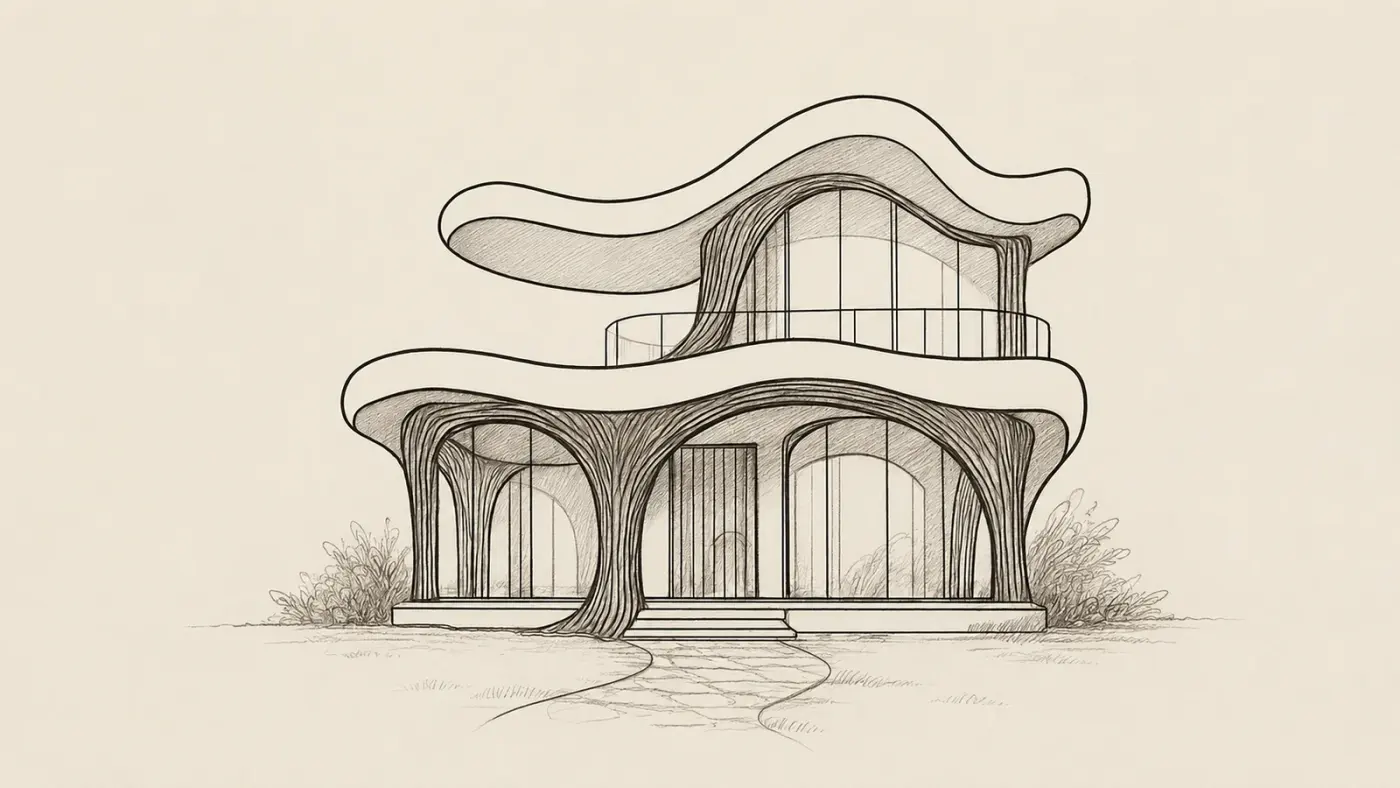
A sketch, rendered with Archome. Demonstration image \u2014 drag the handle to compare.
Side by side
| LookX | Archome AI | |
|---|---|---|
| Focus | Architecture-trained concept generation | Concept to deliverable: stills, plans, 3D, video |
| Starting points | Text, image | Photo, sketch, plan, CAD viewport, text |
| Beyond stills | Concept-image centred | Floor plans, masterplan, details, 3D GLB, video, 4K |
| CAD plugins | Check their site for current list | Free SketchUp + 3ds Max plugins |
| Free trial | Check their site — tiers change | 100 free credits to start, no card |
Pricing and features change — check LookX's own site for their current plans. This page compares how the two approaches work, not this week's price list.
Price, render time & licence
| LookX | Archome AI | |
|---|---|---|
| Starting price | $20/mo or $199/yr (Pro), plus a standing free Basic tier — confirmed on their pricing page | $29/mo (Lite), or free to start |
| Render time | Not stated on their pricing page | About 30 seconds per image, rendered in the cloud |
| Free trial | 7-day free trial on paid plans, on top of an always-free Basic tier (100 X-points, no card) | 100 credits once at signup (3 renders), no card, does not renew |
| Commercial license | Not addressed on their pricing page — confirm current terms on their site | Included on every paid plan |
LookX's prices change — confirm current numbers on their own pricing page before you buy.
Where LookX holds its own
LookX's free Basic tier is a standing plan, not a one-time trial: 100 X-points for model training and upscaling stay available indefinitely with no card on file, so someone testing styles occasionally — a student, a one-off project — never has to subscribe at all.
Choose LookX if
- —Early-stage text-to-concept exploration is most of your AI use and you like their trained styles.
- —Their community templates match the visual language your studio is after.
- —You have run your own project through both and prefer their look — taste is legitimate and only a side-by-side settles it.
Choose Archome AI if
- —Your deliverables extend past concept stills: plans, 3D handoffs, videos, print-ready 4K.
- —You start from real projects — photos, sketches, CAD views — as often as from text.
- —You want interior, exterior, landscape, masterplan and detail work under one subscription.
- —You want to evaluate it on a real job first: 100 credits at signup, no card, three renders.
See the LookX-style concept workflow in Archome
Upload the same elevation, photo or viewport capture you would send to LookX and get a photoreal exterior concept back in about 30 seconds, with the same free-to-start signup Archome uses everywhere else.
Compare them on your own project
Upload one photo, sketch or viewport capture and see what comes back. 100 free credits once at signup, no credit card.
Frequently asked
Is Archome AI better than LookX?+
Both are architecture-first, which already puts them ahead of generic generators. LookX leans into trained concept styles; Archome leans into breadth — plans, 3D export, video, plugins — with a structure lock for geometry fidelity. Run the same brief through both; the comparison that matters is on your own project.
Do both handle image-to-image?+
Yes. On Archome every image-to-image path runs under an explicit structure lock: massing, openings and camera are treated as fixed while materials and atmosphere change. Anything the input hides, any model must infer — that caveat is universal.
What does the free tier include?+
100 credits granted once at signup, no card. Free renders are for evaluation and personal use; any purchase adds a full commercial licence.
Can I export beyond images?+
Yes — 2D-to-3D produces a downloadable GLB mesh, video tools produce short MP4 clips, and 4K upscaling covers print. That chain staying in one account is the practical difference.
Keep reading
Looking for a profession-specific breakdown? See Archome for architects, interior designers, architecture firms and visualization studios — or the plain-english guide to choosing AI rendering software.