Lumion Alternative — No Workstation Needed
Lumion is built for assembling and populating a full scene. Archome AI is built for the moment the image is the deliverable.
Last updated: 13 October 2026
What Lumion is
Lumion is a desktop rendering application aimed squarely at architecture. You import a model, then dress the scene from a large library — vegetation, people, vehicles, weather, water — and render stills or animation from it.
The library is the point and it is genuinely strong. Populating a landscape convincingly, getting seasonal planting right, or producing a set of consistent views across a large project are jobs it does well and predictably.
It is also demanding: a serious GPU, a licence, and time spent assembling the scene before the first image exists. For a visualisation team that is a reasonable trade. For an architect who needs one convincing image of a facade this afternoon, it is a lot of machinery.
Where Archome AI differs
Archome AI skips scene assembly entirely. Capture the view you already have — from Lumion, from SketchUp, from a phone — upload it, and describe the materials, light and weather you want. The building in your capture stays the building; the surface treatment and atmosphere change.
There is nothing to install and nothing computed locally, so the work is not tied to a workstation. That is the whole difference in practice: the first convincing image arrives in about thirty seconds instead of after an afternoon of import and dressing.
The trade is control and repeatability. You are describing an outcome rather than placing objects, so you cannot put a specific tree at a specific coordinate. For concept and client conversation that is rarely what is needed; for a final animation set it very much is.
What Archome AI produces
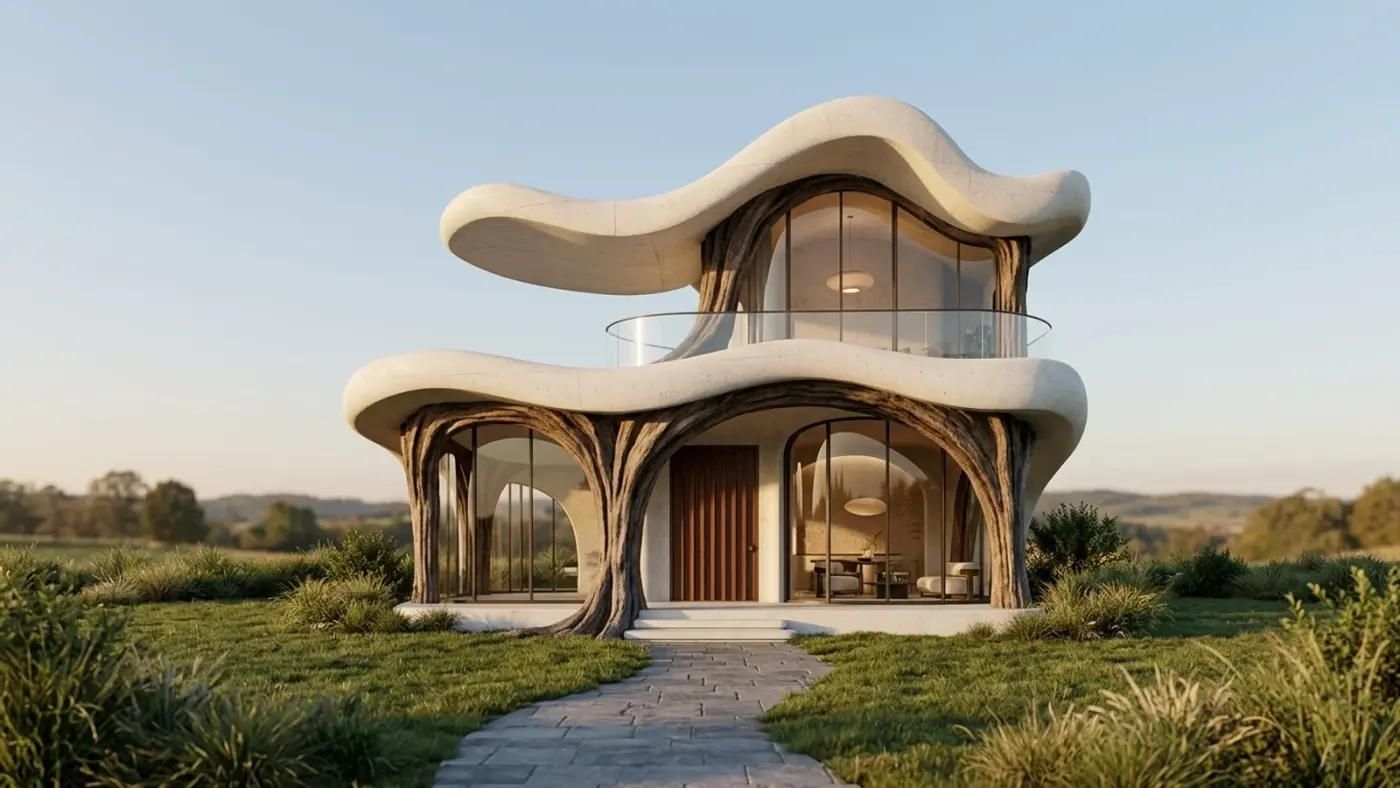
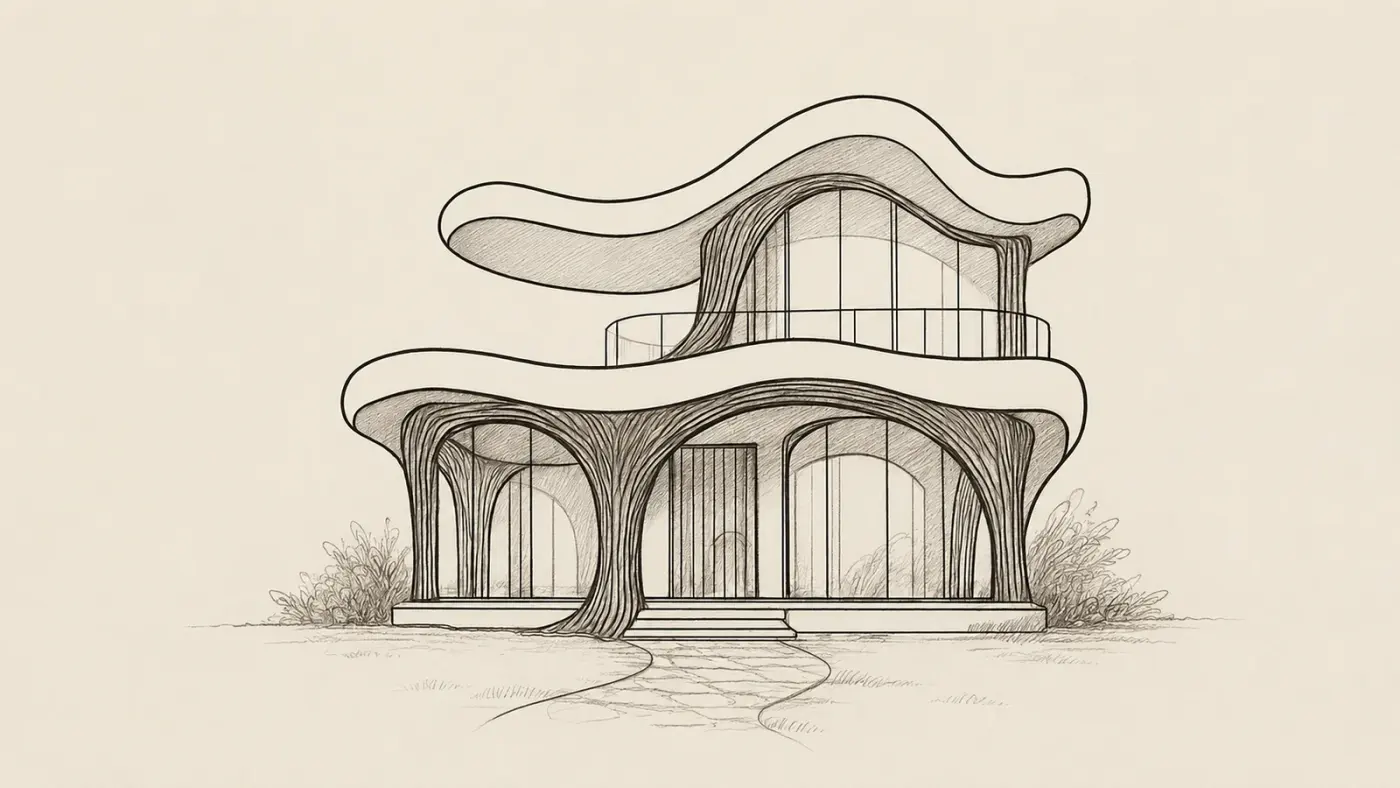
A sketch, rendered with Archome. Demonstration image \u2014 drag the handle to compare.
Side by side
| Lumion | Archome AI | |
|---|---|---|
| Type | Desktop render engine | Browser AI renderer |
| Hardware | High-end GPU | Any device — server-side |
| Input | Imported 3D model | Screenshot, photo, sketch or floor plan |
| Asset library | Large — placed deliberately | Described in words, not placed |
| Animation | Yes — a core strength | Short clip from a still, not a flythrough |
| Time to first image | Import, dress, light, then render | About 30 seconds |
| Free trial | Check their site — terms change | 100 free credits to start, no card |
Pricing and features change — check Lumion's own site for their current plans. This page compares how the two approaches work, not this week's price list.
Price, render time & licence
| Lumion | Archome AI | |
|---|---|---|
| Starting price | See their pricing page — annual-only subscription across View/Pro/Studio tiers, no perpetual license | $29/mo (Lite), or free to start |
| Render time | Real-time once the scene is built — not a per-image wait | About 30 seconds per image, rendered in the cloud |
| Free trial | 14 days per major/minor version, no card — confirm current terms on their site | 100 credits once at signup (3 renders), no card, does not renew |
| Commercial license | Requires a paid plan — the free student license is explicitly non-commercial and watermarked | Included on every paid plan |
Lumion's prices change — confirm current numbers on their own pricing page before you buy.
Where Lumion holds its own
Lumion earns its reputation honestly on the jobs that reward building the scene once: once a landscape or interior is assembled, navigating it live and pulling dozens of consistent views or a full animation reel out of that single scene costs no extra render wait — exactly the workload a per-image tool is not built for.
Choose Lumion if
- —The deliverable is animation or a large consistent set of views across a project.
- —You need specific objects in specific places — this tree, that bench, this vehicle — rather than an atmosphere described in words.
- —Seasonal planting, water and weather have to be controlled precisely rather than requested.
- —You have the workstation and a visualisation role where scene assembly is the job, not an obstacle.
Choose Archome AI if
- —You need one convincing image today and there is no time to assemble a scene.
- —You do not have a workstation, or the work has to happen away from it.
- —The scheme is still moving and several material directions need to be compared before modelling continues.
- —You want to test quality on your own project before paying anything: 100 free credits to start, no card.
See the Lumion AI rendering workflow in Archome
The dedicated page walks through turning a Lumion viewport capture — or any screenshot — into a photoreal image in about 30 seconds, no workstation or annual licence required, with the same free-to-start signup.
Compare them on your own project
Upload one photo, sketch or viewport capture and see what comes back. 100 free credits once at signup, no credit card.
Frequently asked
Can I feed a Lumion render into Archome AI?+
Yes. A finished Lumion still can be restyled, upscaled to 4K, edited in one region with masked inpainting, or turned into a short cinematic clip. The two are not mutually exclusive.
Is this a free Lumion alternative?+
There is a free tier — 100 free credits to start, no card, three renders — which is enough to judge quality on your own project. It is not a free replacement for an animation pipeline, and we do not claim it is.
What hardware do I need?+
Whatever opens a browser. Rendering runs on our servers, so a laptop on site behaves the same as a desktop.
Will my building change?+
No. The captured geometry is held: massing, floor count, window positions, camera angle. Materials, light and context come from the prompt. The honest caveat is that anything hidden behind an obstruction in your capture has to be inferred.
Keep reading
Looking for a profession-specific breakdown? See Archome for architects, interior designers, architecture firms and visualization studios — or the plain-english guide to choosing AI rendering software.