
AI Japandi Interior Design Guide
· 5 min read
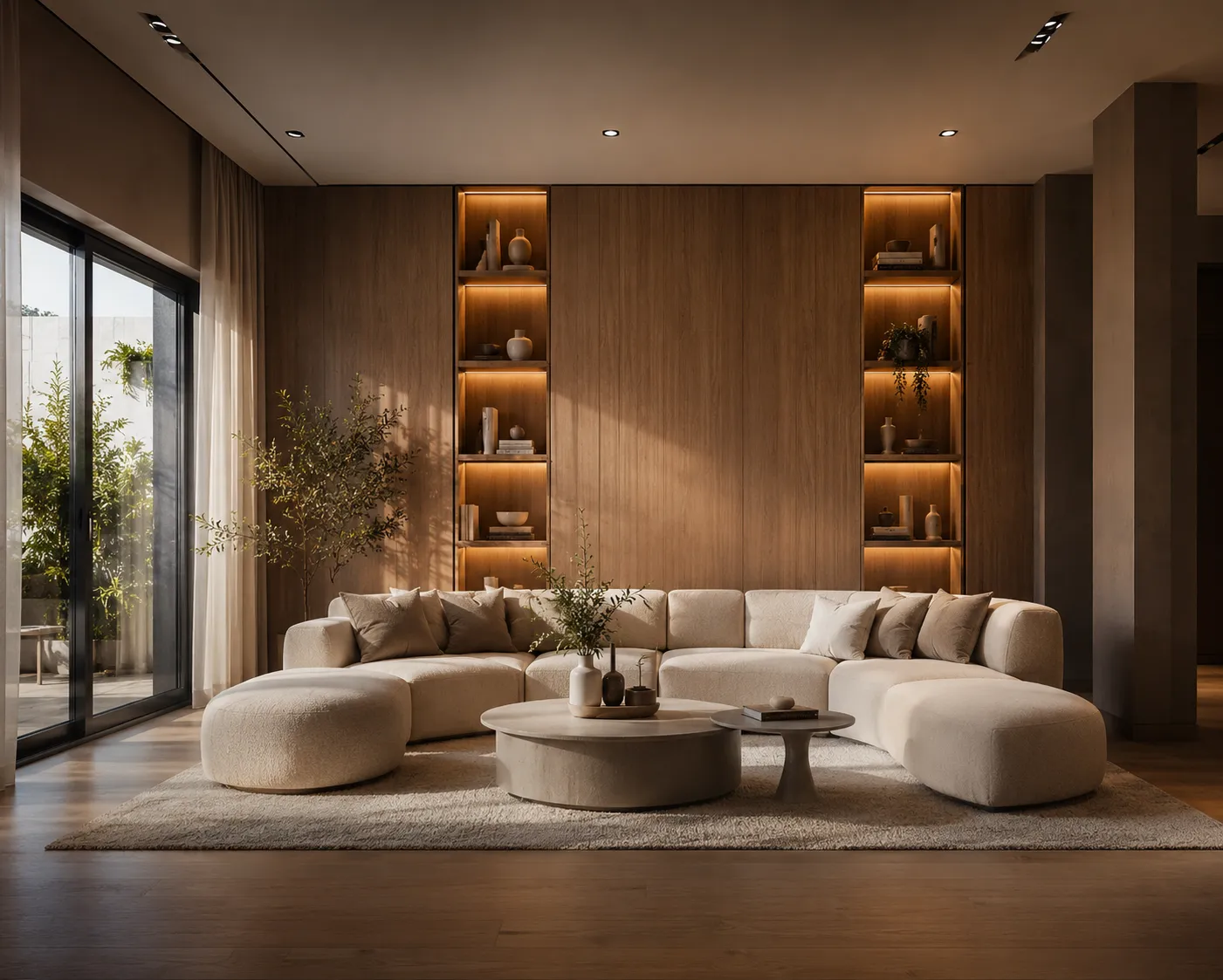
Japandi is the style everyone recognizes and almost no one names correctly - the low platform bed, the raw-oak side table, the single ceramic bowl on an otherwise empty shelf. It merges Japanese restraint with Scandinavian warmth, and the two traditions turn out to share more ground than people expect: both value natural materials, quiet color and furniture that earns its place. The hard part is translating that into your actual room rather than a curated showroom shot. AI closes that gap - upload a photo of the space you have and see it redesigned in the style properly, with your real walls, windows and proportions intact.
What makes a room read as Japandi
The palette stays narrow and warm: raw and lightly stained wood, unbleached linen, matte black or bronze metal, and walls in warm white, sand or soft charcoal rather than stark white. Furniture sits low - platform beds, low sofas, floor cushions - which opens up sightlines and makes a room feel calmer even at the same square footage. Ornament is almost entirely absent; a Japandi room might have one piece of pottery, one plant, one piece of wall art, and nothing competing with it. Where Scandinavian design leans cozy and layered, Japandi pulls in wabi-sabi's comfort with imperfection - visible wood grain, hand-thrown ceramics, asymmetry - so the result feels intentional rather than empty.
How the AI keeps your real room
The model reads the geometry already in your photo - wall lines, window and door positions, ceiling height - and holds that fixed while it replaces materials, furniture, colors and lighting. Because your actual proportions don't change, you're judging whether a low platform bed and a raw-oak console genuinely suit your room's dimensions, not a generic staged photo that happens to share the aesthetic.
From photo to a redesign you trust
- Upload a clear, well-lit photo of the room, shot from a corner so most of the space is visible.
- Describe the direction: "Japandi style, raw oak furniture, low platform bed, linen bedding, warm white walls, one ceramic accent, soft natural light".
- Generate a batch of alternatives - small wording changes shift the wood tone, the wall color and how much negative space is left noticeably.
- Found a version that works? Upscale it to check the wood grain and texture detail before you shop.
Prompt details that separate real Japandi from generic minimalist
The two get confused constantly. Generic "minimalist" prompts tend to produce stark, cold rooms with hard white surfaces and glossy finishes - closer to a showroom than a home. Japandi needs warmth named explicitly: "raw wood grain visible, matte finishes, warm white not bright white, one imperfect ceramic piece" pulls the result toward the softer, lived-in version. Naming furniture height also matters - "low platform bed", "low sofa, no tall backrest" - since a bare prompt often defaults to standard furniture heights that break the horizontal, grounded look the style depends on.
Common mistakes
The most frequent one is over-styling the prompt with too many accent pieces at once - Japandi's calm comes from restraint, so asking for multiple statement items in one generation usually produces something closer to eclectic than Japandi. The second is skipping the wood-grain and matte language entirely, which pushes results toward smooth, glossy surfaces that read as generic modern rather than warm and tactile. The third is treating one generation as final - run several variations and compare, since wood tone and how much is left empty shift meaningfully between outputs even from a similar prompt.
Where this fits with the rest of the room
Japandi and Scandinavian share enough DNA that it's worth comparing both against your own room before committing - see the AI Scandinavian interior design guide for the cooler, brighter sibling style. The style's low-profile furniture and open sightlines also make it one of the strongest options for compact rooms; the small apartment design guide covers that angle directly. Once you've settled on a wood tone, Material Swap lets you test alternatives - raw oak, walnut, whitewashed pine - without touching anything else in the render.
Ready to see your own room in Japandi style? Open Interior AI and upload a photo - your first renders are free.