
Contemporary House Exterior Design with AI
· 5 min read
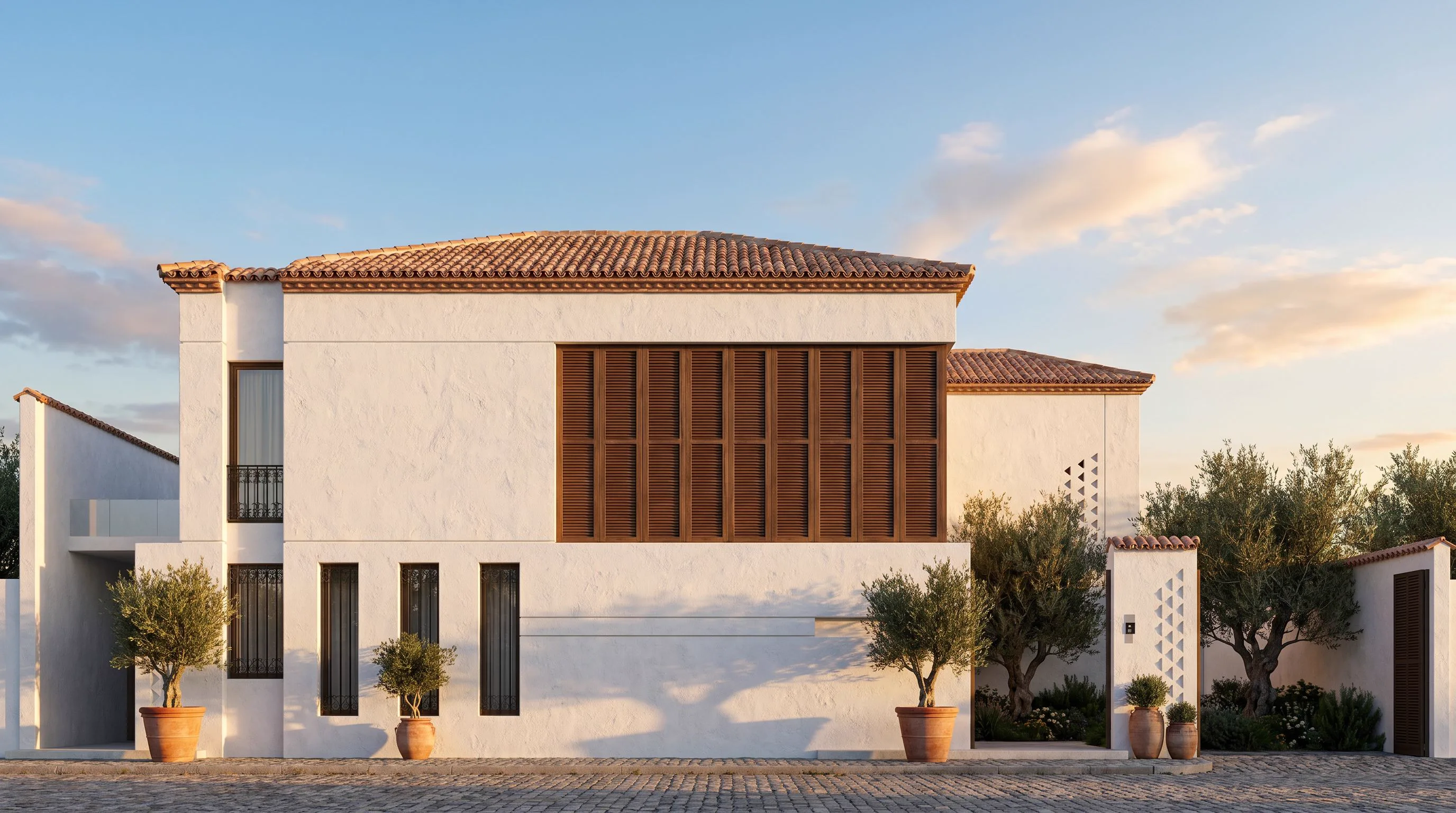
A contemporary exterior is one of the hardest renovation directions to picture in advance, because so much of it depends on how two or three materials sit together on your actual house — not on a Pinterest board of someone else's. Archome's Exterior AI removes the guesswork: upload one photo of the front of your house and see it restyled with a contemporary material palette in about 30 seconds, before you call a contractor or order a single panel.
The appeal of contemporary design is that it reads as deliberate rather than decorated — a small set of honest materials, held in clean proportion, rather than applied ornament. That makes it a genuinely different look from a traditional or farmhouse remodel, and also one of the easiest to get wrong without seeing it first: too many materials competing at once and the house reads busy instead of composed.
Testing that balance on paper or in your head is close to impossible. Testing it on a real photo of your own house, in a few seconds, is what actually settles the decision — which is exactly what the exterior render tool is built for.
What makes an exterior read as "contemporary"
Contemporary exteriors lean on a short list of consistent moves: two or three honest materials used in large, simple panels rather than many small decorative pieces — commonly wood cladding paired with concrete, render or stone; large sections of glazing instead of punched window openings; minimal trim and understated detailing around doors and windows; and landscaping that reads as part of the composition rather than an afterthought at the base of the wall. It is a style built on restraint and proportion, so it shows up clearly even on a modest single-family home, not only on architect-built houses.
How the AI keeps your actual house
The render is generated from your photo, not from a generic stock house. The model reads the real structure in the image — roofline, window and door openings, overall proportions and the camera angle you shot from — and holds all of that fixed. What changes is the material and lighting layer on top: cladding, render or stone finish, window frame color, the planting and paving right in front of the house, and the time of day. The result still looks like your house, in a different material language, rather than a different building that merely resembles it.
Getting a usable contemporary render
- Upload a straight-on daytime photo of the front of the house. A wide-angle or heavily angled shot distorts proportions and makes the materials harder to judge.
- Describe the materials directly rather than just the word "contemporary": "vertical timber cladding on the upper floor, light grey render below, black window frames, concrete steps to the entry".
- Generate a batch of options and compare them side by side — small shifts in the cladding-to-render ratio change how balanced the whole facade feels, and that is easier to judge across several versions than on one.
- Once a material direction looks right, refine the landscaping or lighting in a second prompt rather than re-describing the whole facade again.
Contemporary directions worth testing
- Wood and render — vertical timber cladding on one volume, smooth light-grey render on the rest, a pairing that reads calm without going cold.
- Wood and concrete — exposed concrete or board-formed concrete panels against warm timber, the classic contemporary combination and a safe starting point for most house shapes.
- Dark cladding, light trim — charcoal fiber-cement or metal panel cladding with pale window frames and a lighter entry element, for a house that wants to look architectural rather than simply "new".
- Stone base, render above — a stone or stone-look veneer at ground level grounding a lighter render upper floor, useful on houses where the existing proportions are already fairly tall and plain.
Common mistakes that weaken the result
The most common one is naming the style instead of the materials — "contemporary" tells the AI almost nothing on its own, while "timber cladding, light grey render, black window frames" gives it something concrete to build from. The second is mixing more than two or three materials in one prompt, which tends to make even a well-composed render look cluttered rather than deliberate. The third is judging a single result: generate a few versions of the same brief before deciding, since the material balance shifts noticeably between runs on an identical description.
Where this fits with the rest of your project
A contemporary facade rarely stands alone. If you want to compare it against other broader directions — paint, re-cladding, roofline — before settling on contemporary specifically, our house facade design guide covers the full range on the same tool. Once the material direction is set, the planting in front of the house carries a contemporary look just as much as the cladding does; the AI garden design guide covers testing that planting in the same photo-to-render workflow, and our AI curb appeal ideas guide covers the smaller finishing decisions — the front door, the walkway, the exterior lighting — once the main material palette is agreed.
Ready to see your own house in a contemporary material palette? Open Exterior AI and upload a photo of the front of the house — your first renders are free, no credit card required.