
Stable Diffusion for Architecture: DIY vs Hosted
· 7 min read
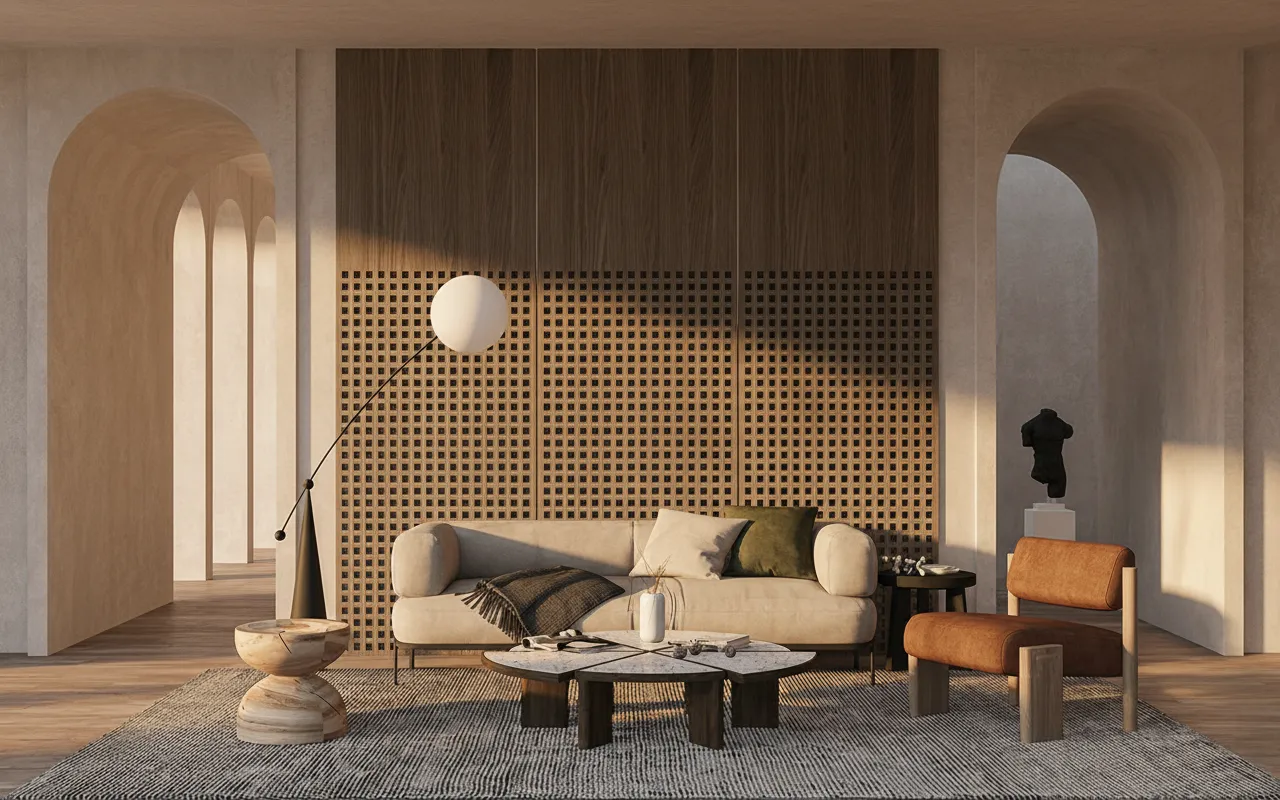
Search "stable diffusion architecture" and you'll find tutorials promising unlimited free photorealistic renders on your own machine. The promise is real — Stable Diffusion with ControlNet is exactly the technology that made AI architectural rendering possible, and running it yourself costs nothing but electricity. What the tutorials undersell is everything around the render button. Here's the honest accounting.
Why DIY is genuinely powerful
- Total control. Every sampler, every ControlNet weight, every denoise value is yours to tune. No hosted tool matches that granularity.
- Free at the margin. Once the hardware exists, render number 10,000 costs the same as render number one.
- Custom pipelines. Train a LoRA on your office's visual style, chain nodes in ComfyUI, batch-process a whole option study overnight. This is real capability that no product fully replicates.
The bill nobody itemises
- Hardware. A GPU with 12 GB+ of VRAM to work comfortably at architectural resolutions — a four-figure purchase if you don't already own one.
- The install. ComfyUI or Automatic1111, Python environments, CUDA versions, model checkpoints, ControlNet weights. A weekend if it goes well.
- Model literacy. Which checkpoint for exteriors? Which ControlNet — Canny, depth, lineart — for a pencil sketch versus a SketchUp export? Which LoRA stack? These choices decide output quality more than the prompt does.
- Prompt engineering as a discipline. Negative prompts, weighting syntax, seed management. Learnable — but it's learning, on the clock.
- Breakage. The ecosystem moves fast and backwards compatibility is not its culture. An extension update can take your working pipeline down the morning of a deadline.
Who should choose DIY — sincerely
Some people should absolutely run their own stack: studios building a custom pipeline around a trained house style, technically-minded architects who enjoy the tinkering as its own reward, anyone with strict data-locality requirements, and researchers pushing what the models can do. For them the control is the point, and the maintenance is an acceptable tax. If that's you, the terms in our AI rendering glossary — ControlNet, LoRA, denoising strength — are the map.
The maths for everyone else
An architect billing 100 an hour who spends two hours a month keeping a pipeline alive has spent more than a year of a hosted subscription — before counting the setup weekend. The craft you're paid for is the building, not the ComfyUI graph. There's a reason most practices treat rendering infrastructure the way they treat email servers: someone else's job.
The hosted version of the same technology
A hosted tool is the same idea — geometry in, controlled photorealism out — with the pipeline maintained for you and current-generation models swapped in as they improve. Upload a sketch or viewport to Sketch to Render and you get the ControlNet-style workflow with zero installation: your linework leads, the AI adds materials and light in about 30 seconds, from any laptop. The sketch to render walkthrough maps the hosted equivalents of the settings you would otherwise tune by hand. The prompting skill transfers directly — if you've written SD prompts, the architectural prompt library will feel familiar.
Where Midjourney sits in this comparison
Stable Diffusion and Midjourney get grouped together as "the general image models", but they fail architecture differently. SD is controllable — ControlNet exists precisely so you can force it to respect a sketch — and the cost is the pipeline you have to build and maintain. Midjourney has no equivalent control layer, so it produces more beautiful images and follows your design less. If you were choosing between them for architectural work, that trade is the whole decision; Midjourney for architecture covers where it earns its place and where it stops being useful.
Verdict
DIY Stable Diffusion is the right call when the pipeline itself is part of your work. When the render is just a means to a client decision, hosted wins on total cost the moment you value your hours. Run one sketch through the hosted version — free — and compare it against your local output; the answer tends to make itself obvious.